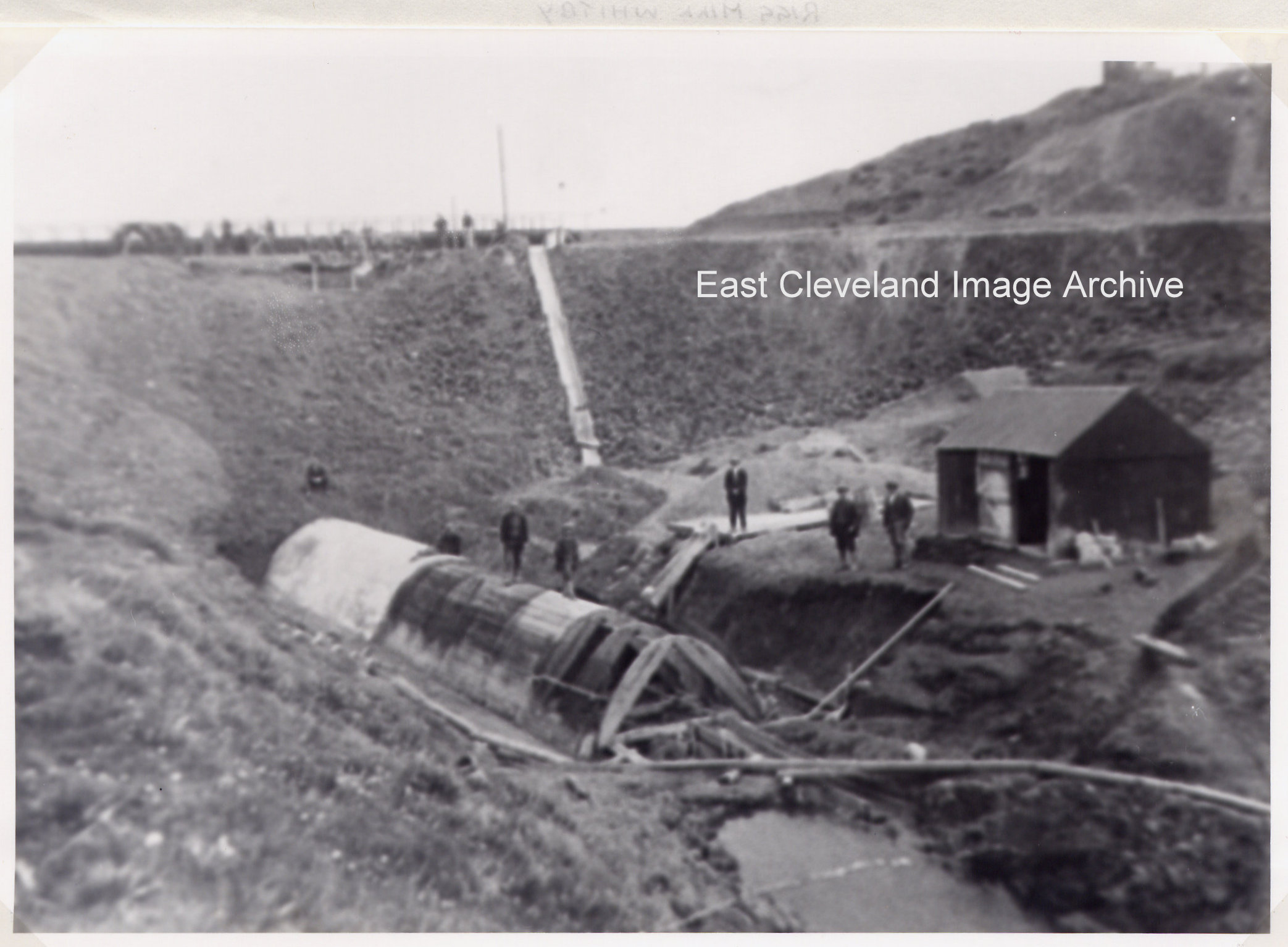
Construction in progress of the Raithwaite culvert and road – Whitby to Sandsend – this to allow access for the Newholm beck to flow into the sea. The present day road from Sandsend to Whitby passes over this now hidden engineering work. David Richardson advised: “The photograph was taken sometime during the early 1920’s when the culvert and road where constructed in Raithwaite valley near Sandsend.” The original image possibly taken by Tom Watson of Lythe; he was commissioned to make a week by week photographic record of the works.
Image courtesy of the Pem Holliday Collection, thanks to David Richardson for the update.
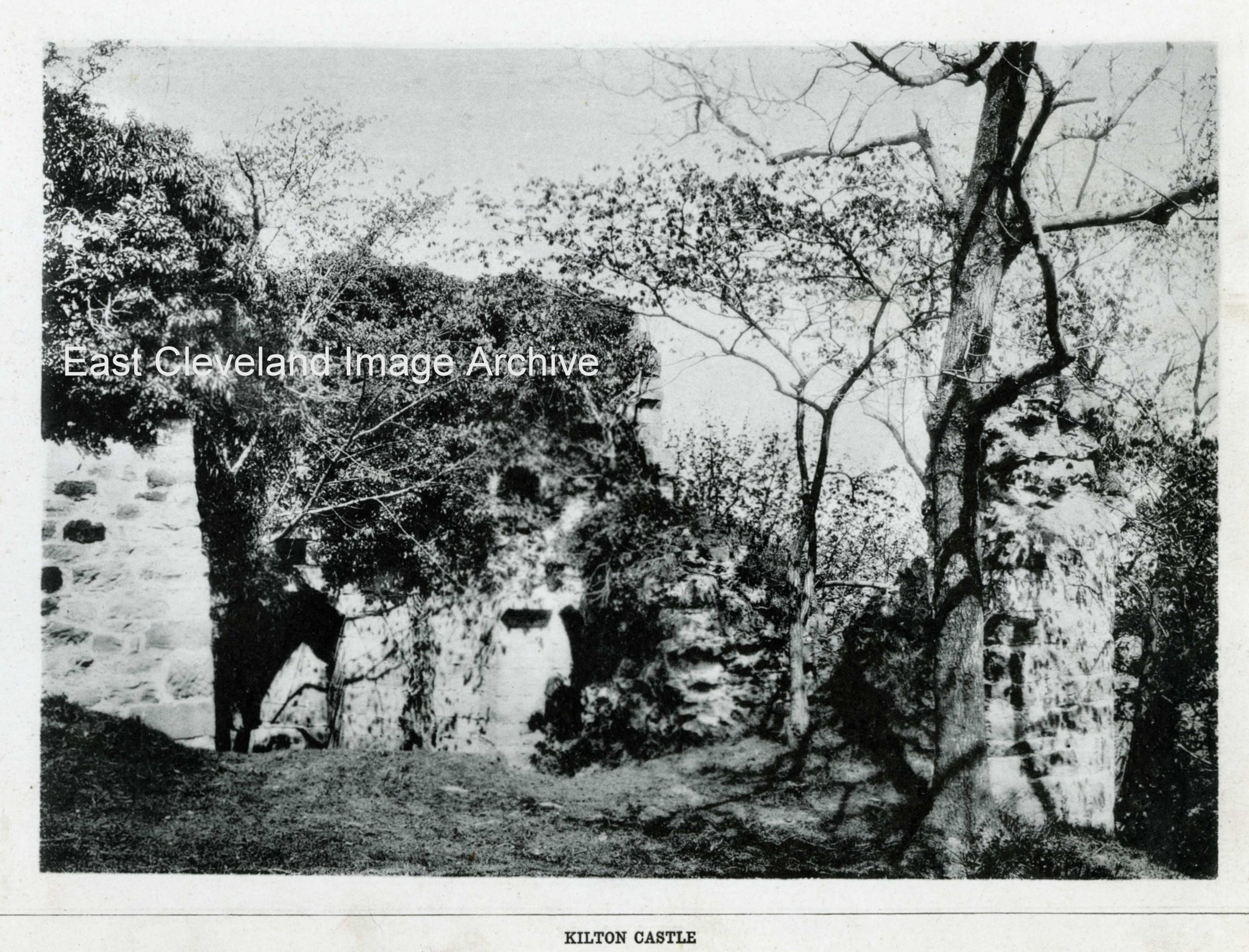
Once the impregnable stronghold of the De Thweng’s, Kilton Castle fell into disrepair and by 1347 had only one occupant – Catherine de Thweng, a widow – and later in the same century, it was described as being totally abandoned. Even less of Kilton castle exists today, despite its Ancient Monument status. Peter Appleton provided information regarding the de Thweng’s: “In 1272, Peter de Brus III died without male heir. His four sisters became co-heiresses of the de Brus estates in north-east Yorkshire. Lucia de Brus married Marmaduke de Thweng and had, as her portion of the estates, the manors of Yarm, Danby and Brotton. The latter included the township of Kilton. Her older sibling, Agnes, received the manors of Skelton, Marske, Upleatham and Kirkleatham, whilst her younger siblings, Margaret and Laderina, received respectively, the barony of Kendal and the manor of Carlton-in-Cleveland.”
Image (courtesy of John G. Hannah) from “Views of Loftus-in-Cleveland and Neighbourhood” published by J. F. Cooke. Apologies for incorrectly quoting Lucy de Thweng.Thanks to Peter Appleton for the update regarding the de Thweng’s.
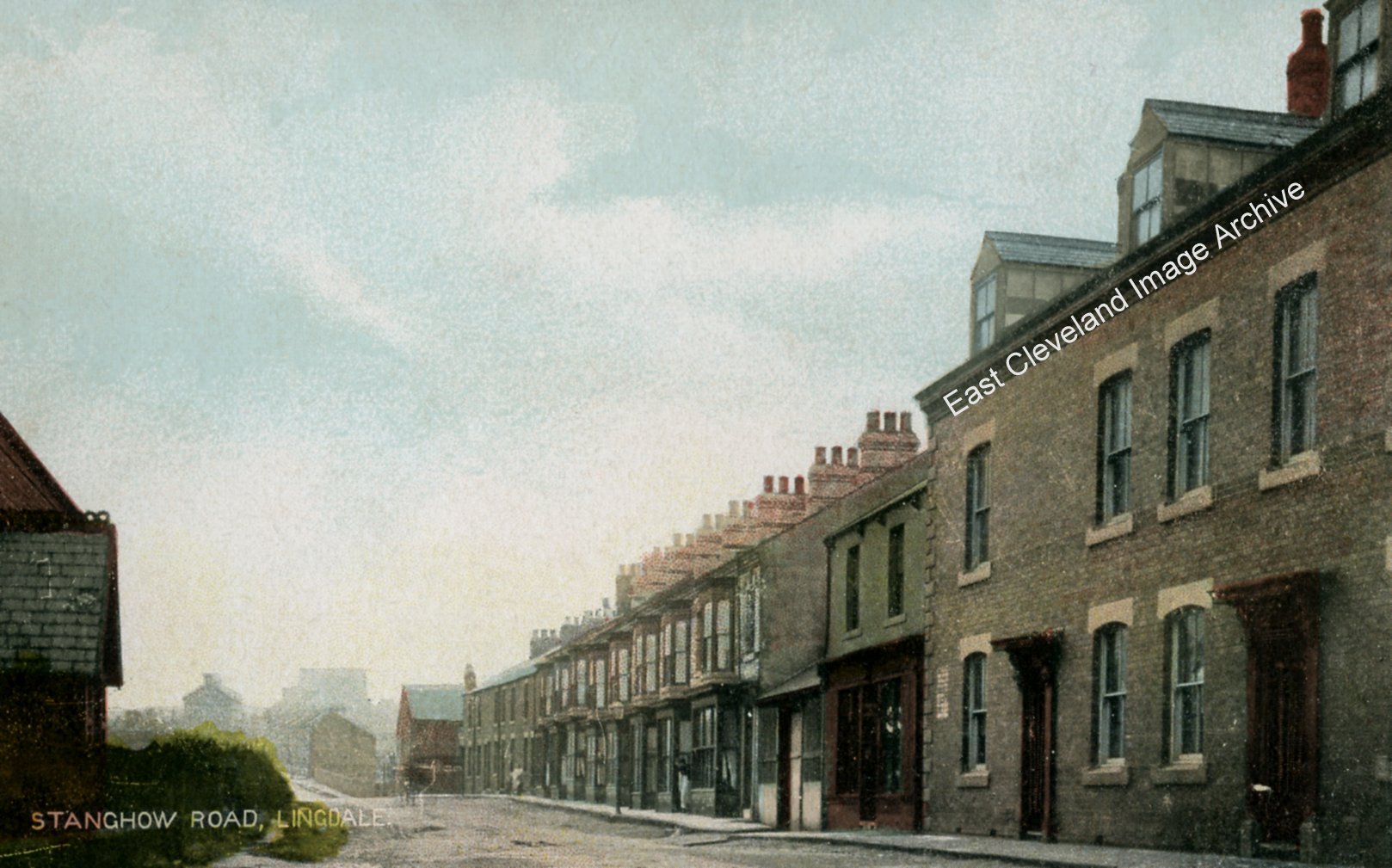
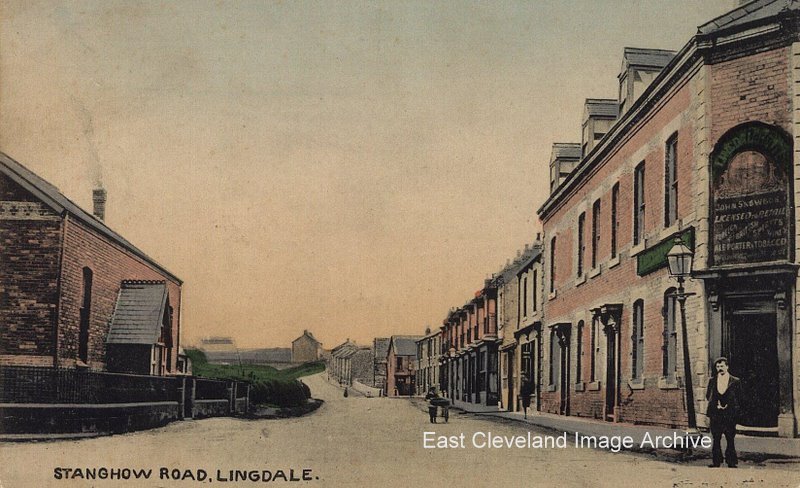
Locally known as the ”top house” the Lingdale Tavern more recently was a boarded building at the cross roads, nothing like the magnificent building in this Phoenix Series postcard from the 1890’s. Derick Pearson advises: “This photograph dates from when John Snowden was the owner of the Tavern or Lingdale Hotel. The Lingdale Tavern is still known to many as Snowdon’s Corner, even after all these years. Dale Terrace also known as Stone Row is further up this road, on the left is the Congregational Chapel which is still there today.” Mark Bottomley comments: “My grandad Charles Bottomley, lived on Stone Row with his grandparent’s – Charles and Flora Bottomley – but was tragically killed in the mining explosion in 1953.” Whilst Ed Stolting adds: “Beautiful picture of Stanghow Road and the Lingdale Tavern! Glad to read that it was reopened a few months ago after having been boarded up all those years which was truly a very sad sight. My grandfather and grandmother lived in the house on the corner of Davison Street and Stanghow Road (no. 2). They were Charles and Winnifred Hogarth. Winny used to always visit what she called “chapel” every Sunday night. I used to visit them from Holland just about every year during the 1950’s!”
Image courtesy of Mike Holliday and Jean Carass; thanks to Derick Pearson, Mark Bottomley and Ed Stolting for the updates.
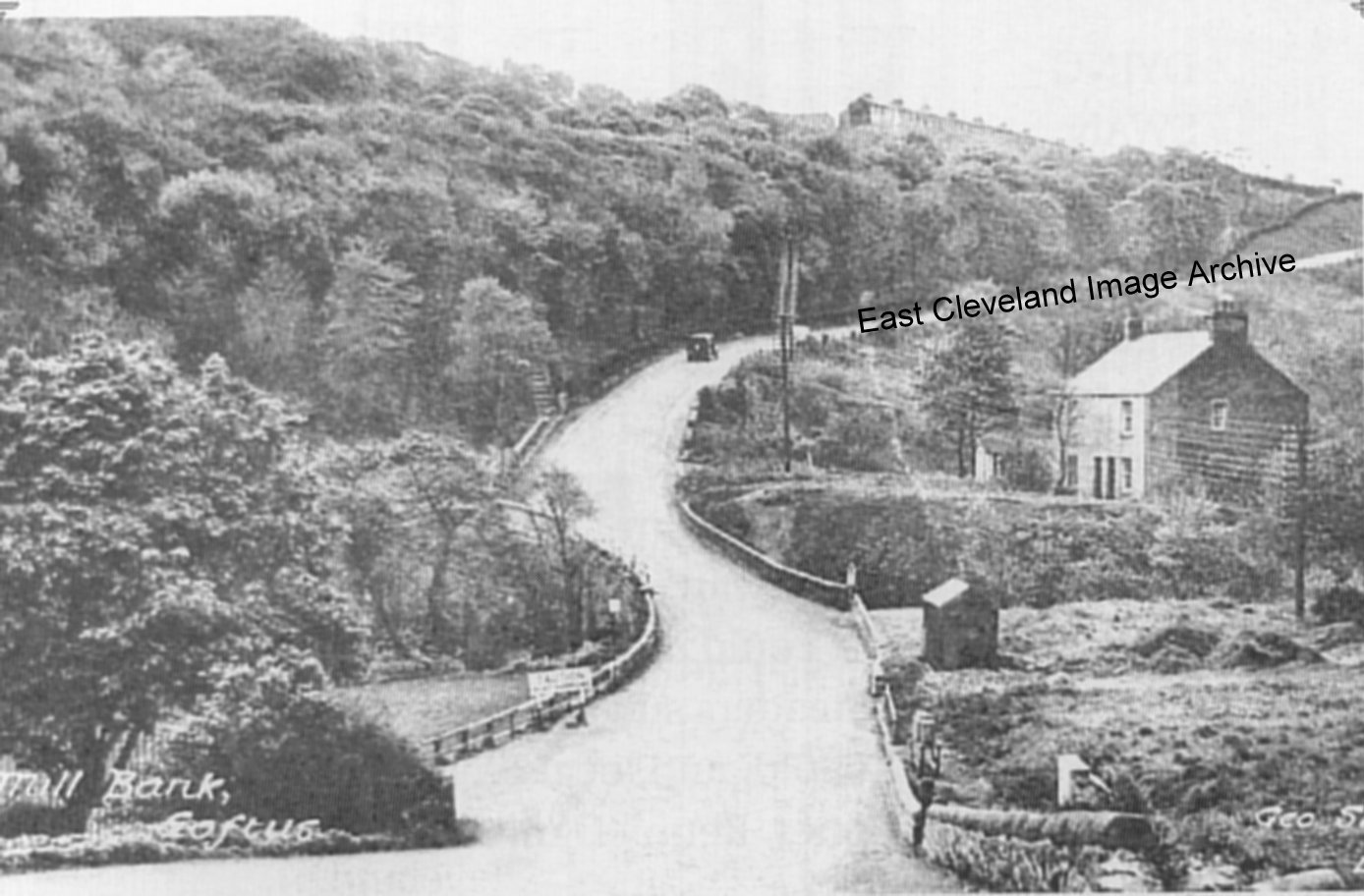
Originally par to a postcard which included the caption: “Wayside Cottage: There’s a yearning for our rural roots sparked by remembrances such as this one of Mill Bank Loftus, where the invitation to peep inside a wayside cottage is encouraged by smoke curling from its chimney”. Such a caption says it all; peace and tranquillity.
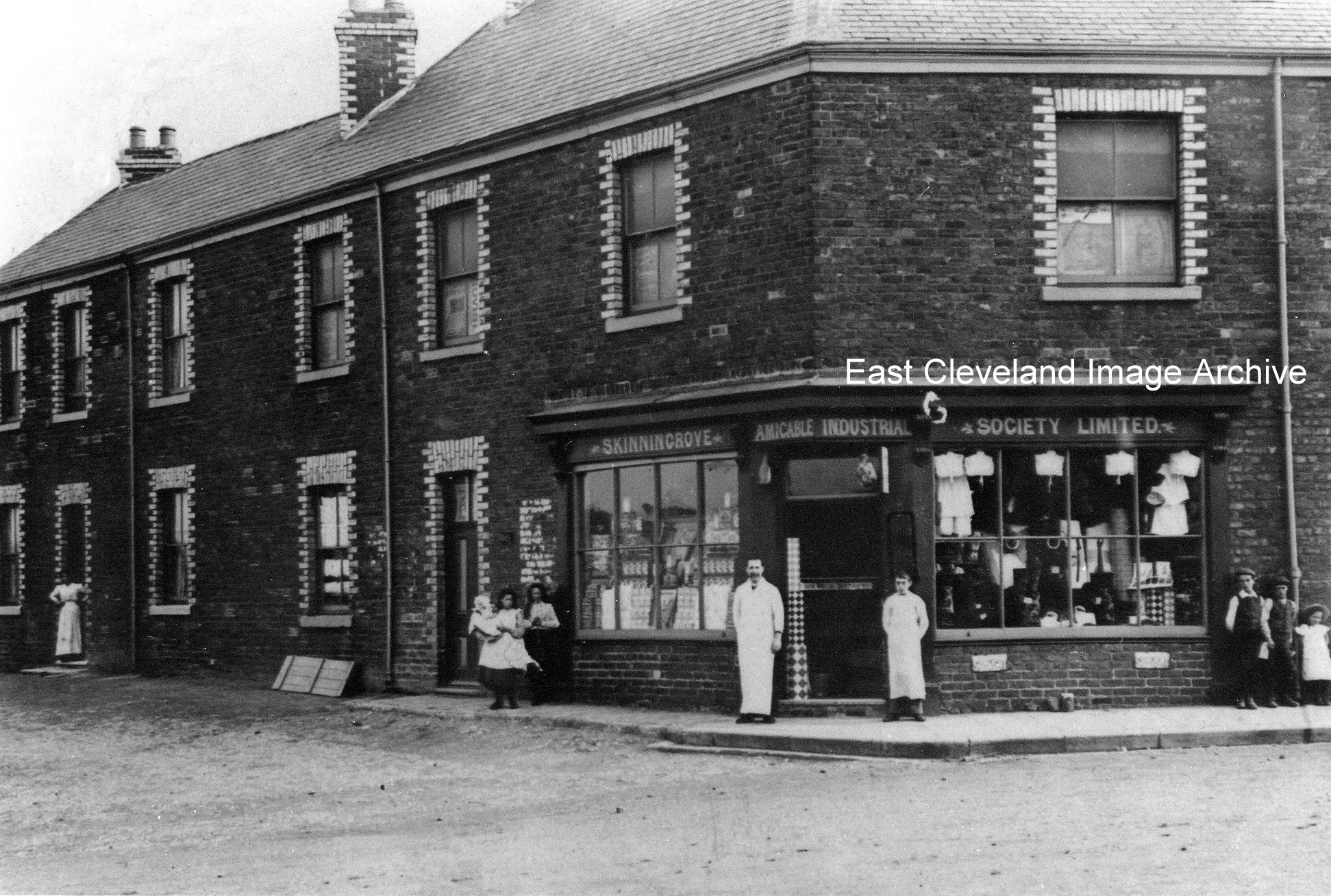
A different view of the square at Carlin how showing, Skinningrove Amicable Industrial Society, or as it became known Porritt’s shop. How clean and presentable they were then even without all the mod cons we have. Bill Kitching tells us: ”This shop was the cobbler`s shop by Fred Hasseldine from before the war. He had a daughter and son Roland who played cricket for Loftus. Reg Porritt a United bus driver took it over from Hasseldine.”
Image courtesy of Carlin How Community Centre and many thanks to Bill Kitching for the detail on Porritt’s shop.
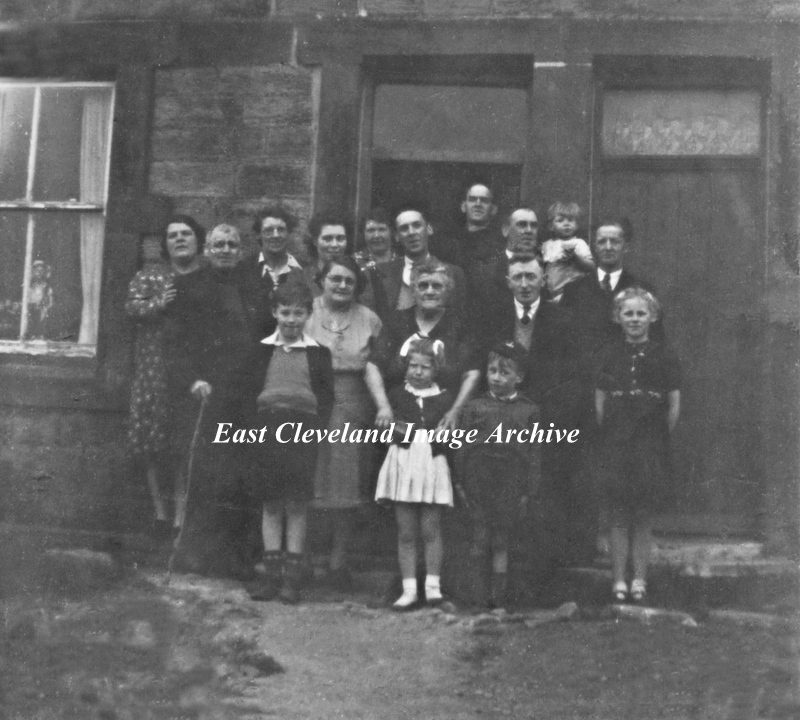
This photograph of a family gathering at Micklow Cottages was taken in 1945.
Along the back, from the left are: Mary S. Hogan (Cooke), Issac Smith Newton he was the street cleaner and rat catcher for Loftus, Ruth Kitchener (Cooke), Lilian Wilkie (Cooke), Edith Baker (Cooke), Robert Cooke, George Kitchener, John (Jack) W. Cooke holding the little boy who is possibly Gordon Cooke and William Hogan ( b. 1870).
Standing in front of them are: ??, Winifred Cooke (Crow), Hannah M. Cooke (Newton), Frederick Baker and Hannah M. Kitchener.
The two children in the front are: Elizabeth E. Wilkie and Peter Kitchener.
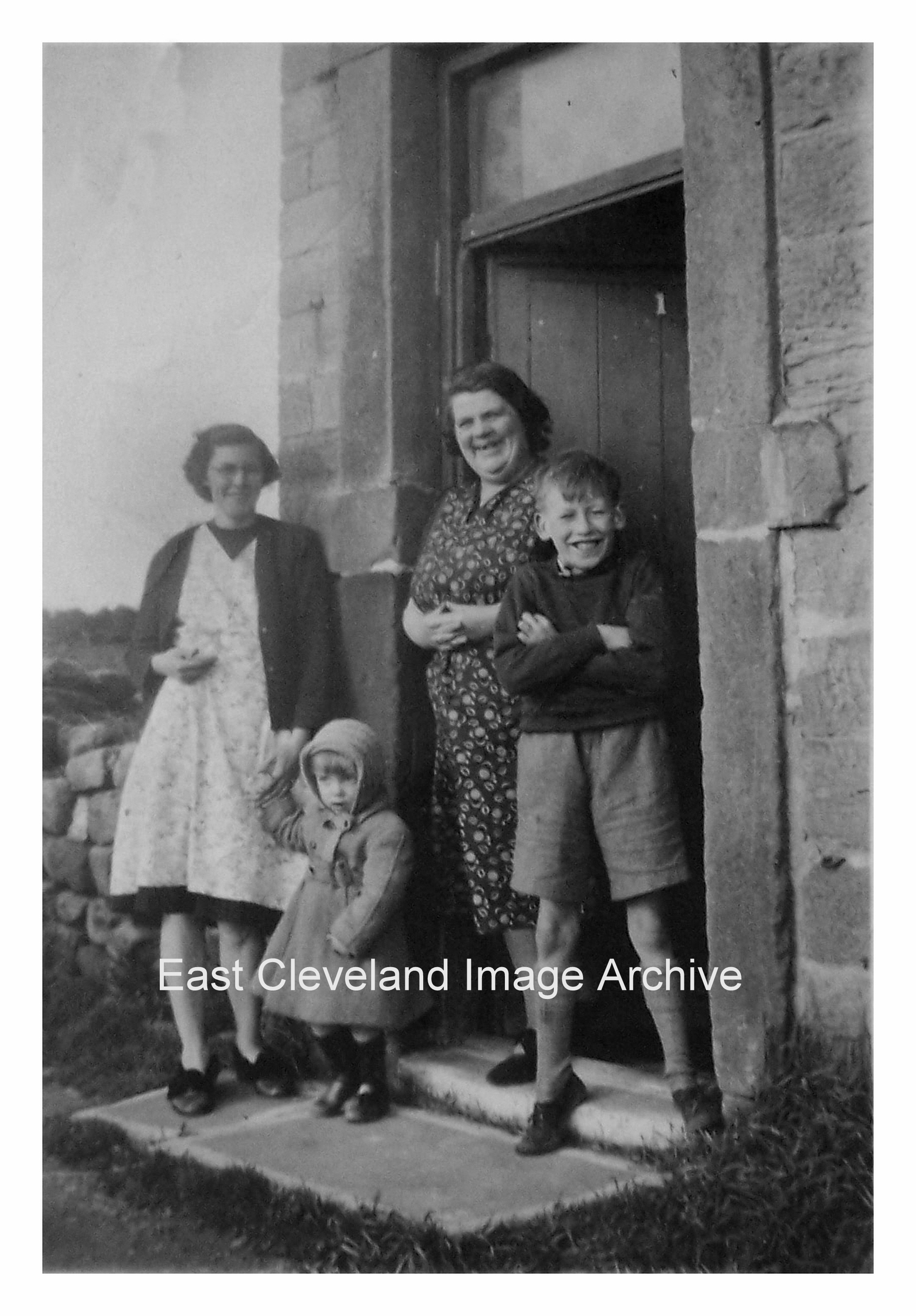
Margaret Bowden (nee Willis) and her son Ted, are on the left. Margaret was a midwife. Mary Stainthorpe Hogan (nee Cooke) is in the doorway with her nephew, Peter Kitchener. The photo was taken at Micklow Cottages about 1951.
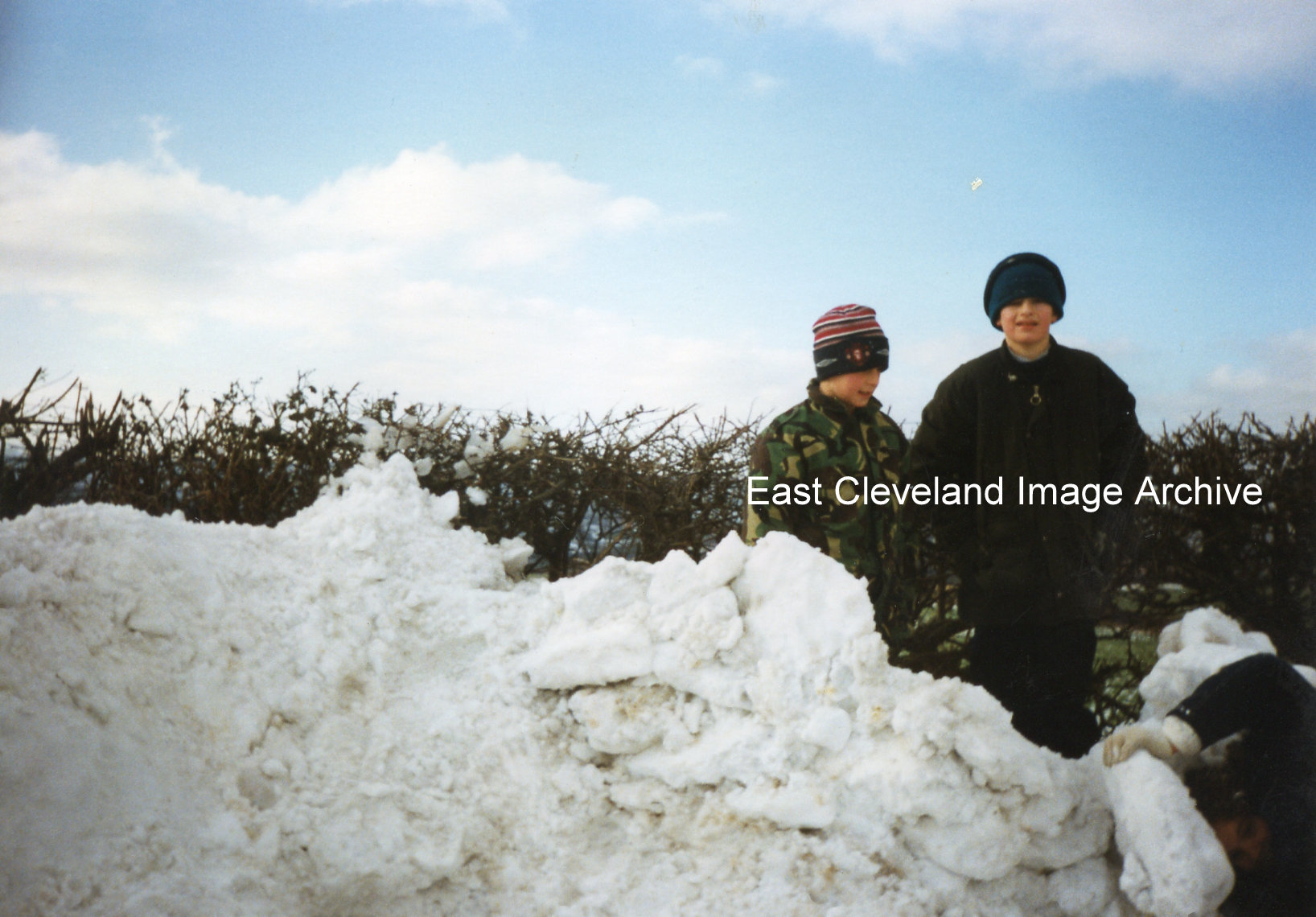
Heavy snow on Micklow Lane, featuring Scott and Guy Breckon with friend (What is the boy in the bottom right corner playing at?), in the late 1980’s. Pictured opposite the site of old windmill (in Joe Wilkinson’s field)
Recent Comments