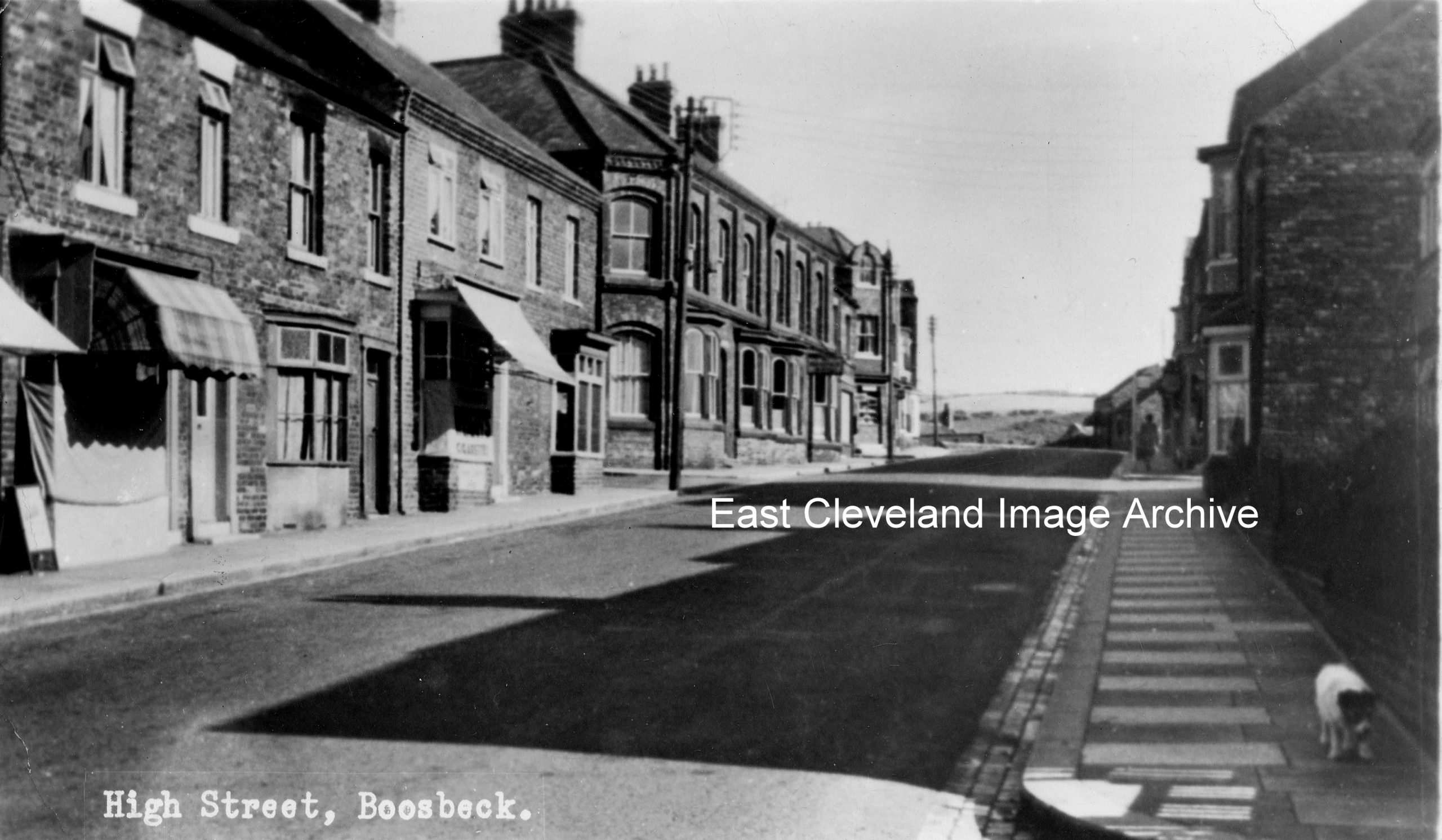
Not Loftus this time but Boosbeck, for a change! A view up the High Street; the Boosbeck Hotel (or Commercial Hotel as it was at one time known) is visible on the left middle of the image.
Image courtesy of Cleveland Ironstone Mining Museum.
|
|
||
|
Not Loftus this time but Boosbeck, for a change! A view up the High Street; the Boosbeck Hotel (or Commercial Hotel as it was at one time known) is visible on the left middle of the image. Image courtesy of Cleveland Ironstone Mining Museum. 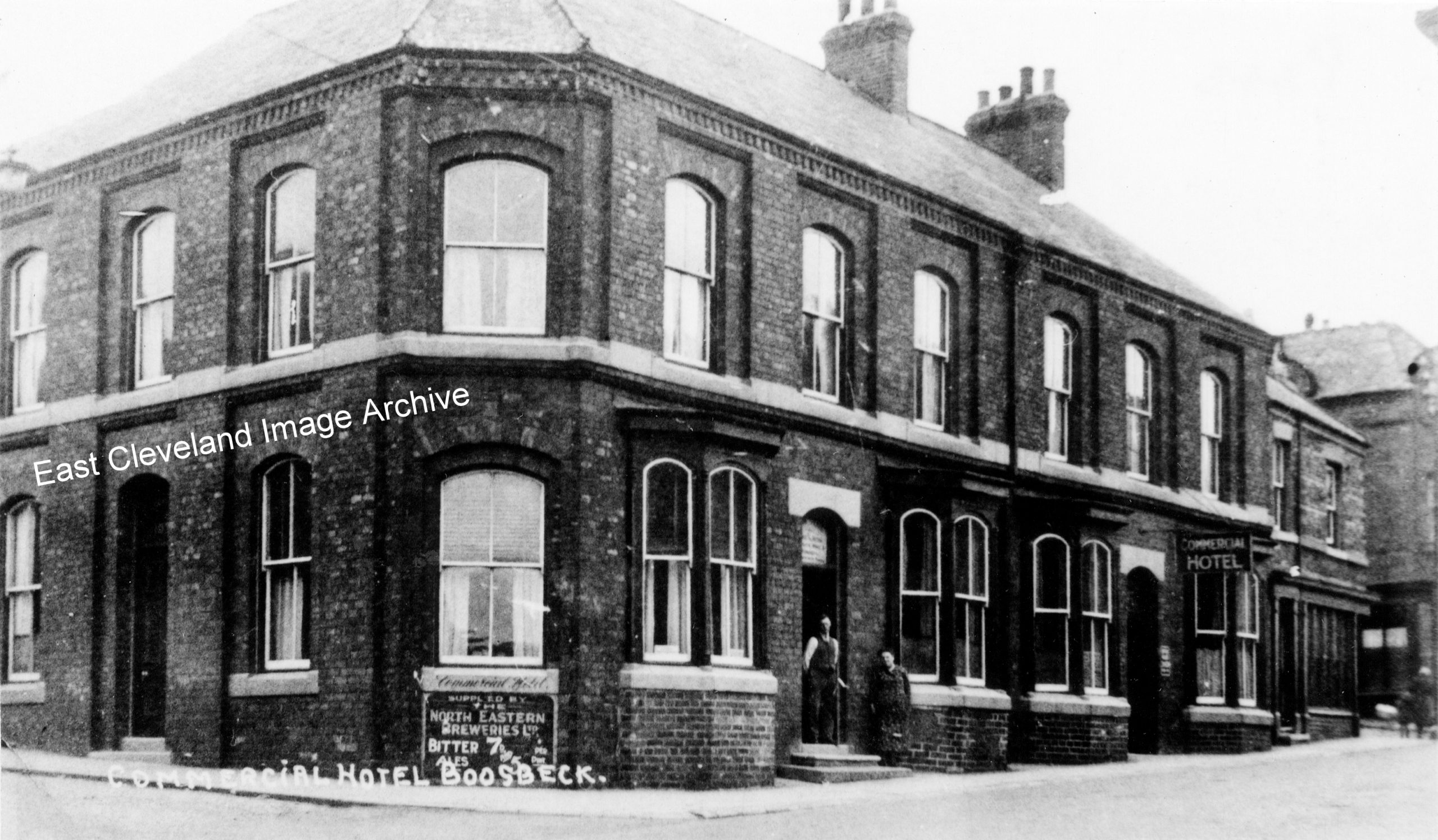 Now known as the Boosbeck Hotel, this image of the Commercial Hotel Boosbeck; when beer and ales were 7 pence a pint. For the younger viewers that’s about 3p in today’s money, think I’ll go for a pint or two.
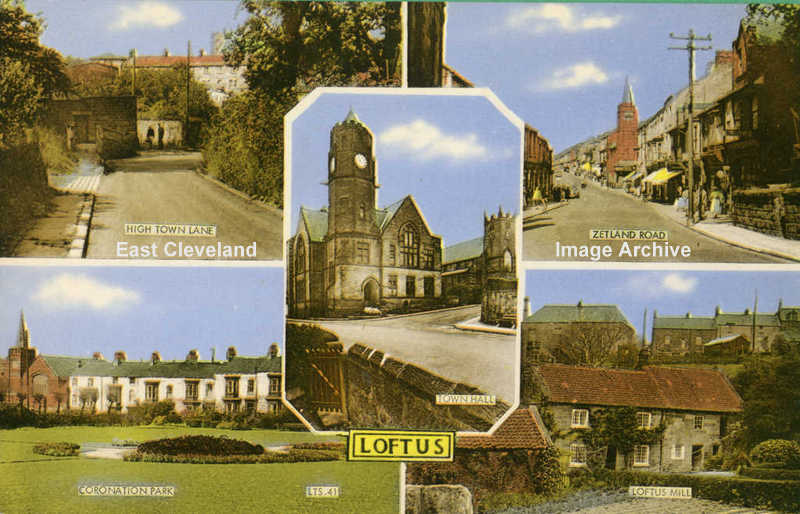
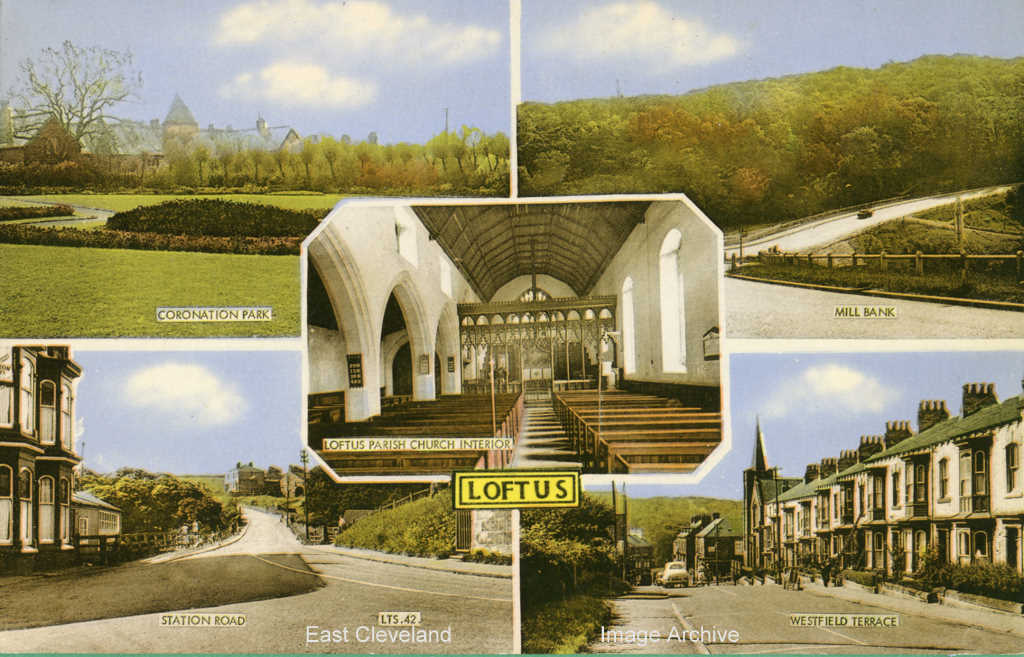
A colourful, tinted Frith postcard, showing views of Loftus. A note on the back of the card says that it was bought in 1968. Image courtesy of Carolyn Richards.
A similar card to the one above, showing a different set of images of Loftus. Image courtesy of Carolyn Richards. 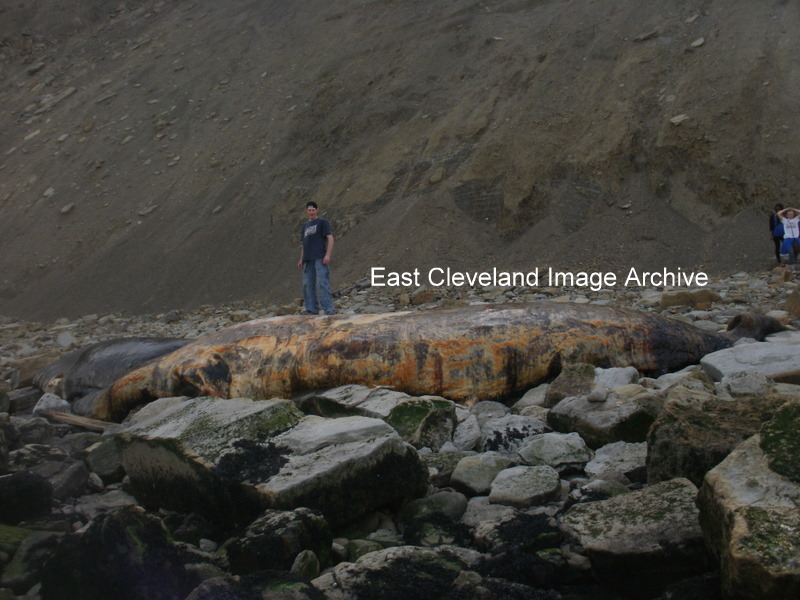 Yes it really is a beached whale; this photograph was taken about in May 2010 at the foot of the cliffs leading from Hummersea beach towards Boulby. Image courtesy of Julie Morrison. 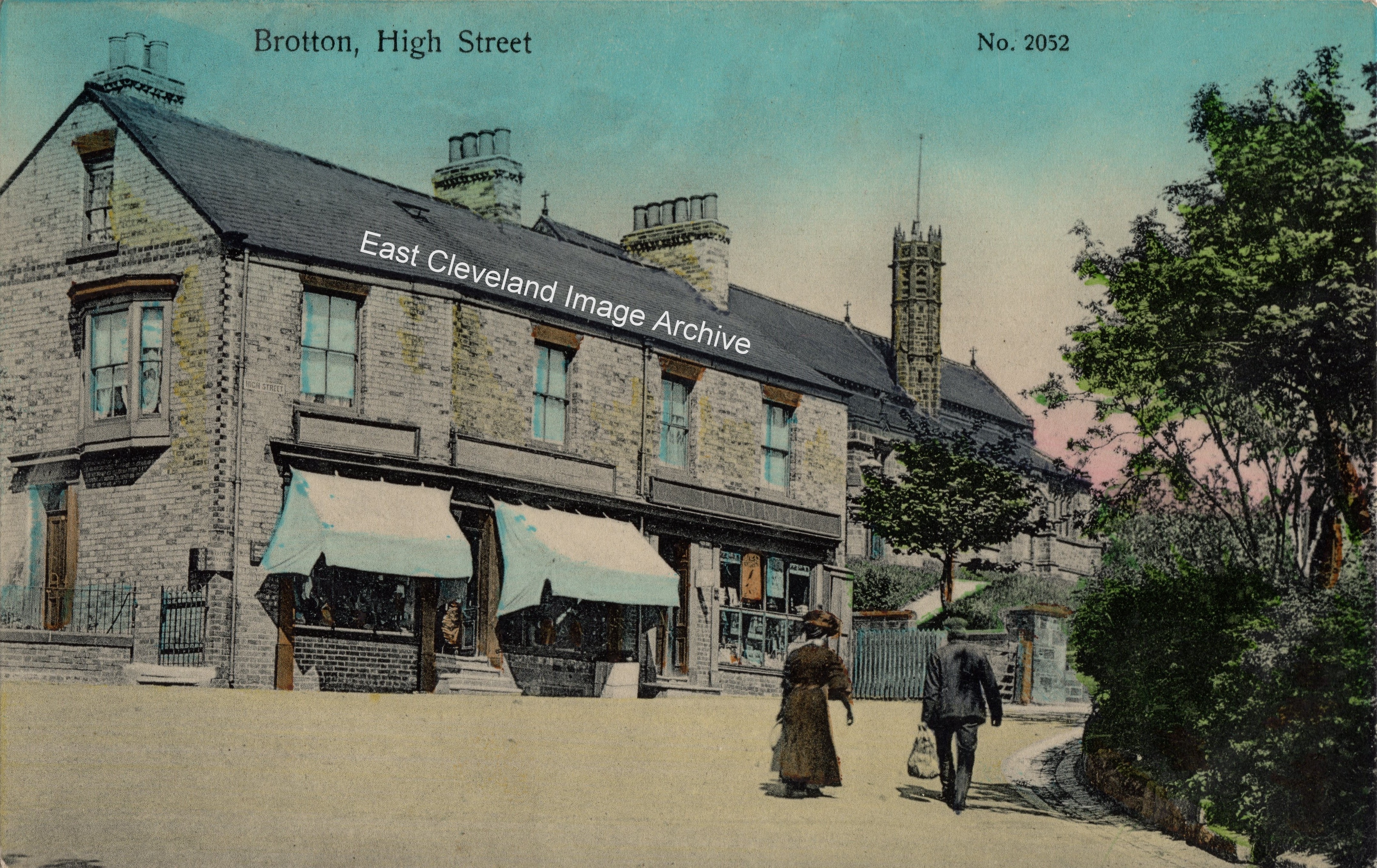 A postcard view from the Phoenix Series (Brittain & Wright of Stockton) and dating from pre-1909, showing Brotton’s Chemist Corner from below the White House. Image courtesy of Julie Tyrka and Edgar Treloar. 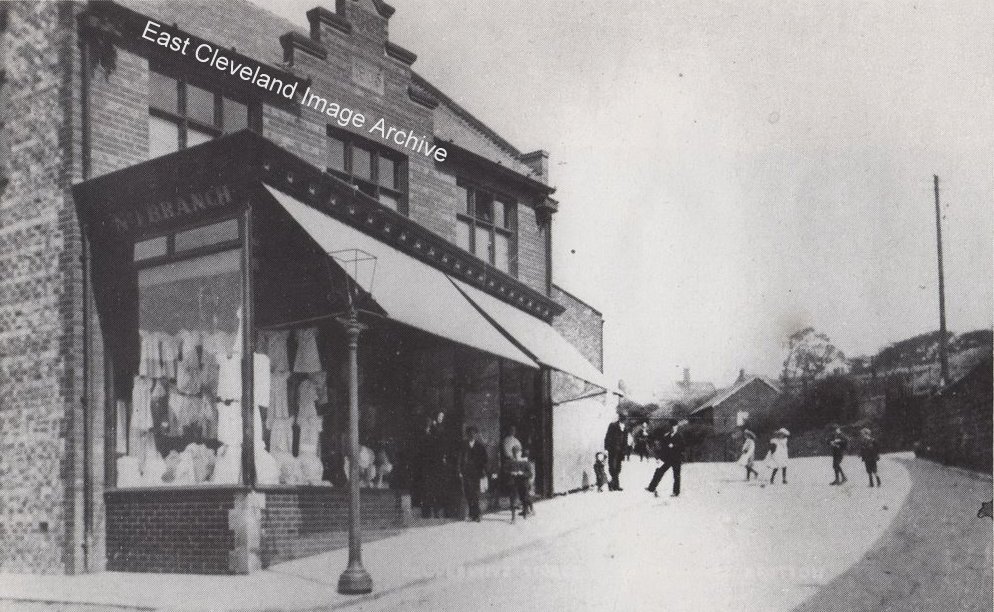 Brotton Co-op (Drapery Department), again very early 1900s. Note the Salvation Army building on the right above High Wall and just above it St Margaret’s Church. Also note the wire frame Gas lamp in front of the No 1 Branch Co-op. An update from Julie Riddiough: ”Hi, it’s actually the Co-op drapery which was later owned by Ivan Dawson from Loftus and became Brotton Drapery, then became the New Methodist Church in the 1980’s. In the gap to the right of this building was a large tent like structure which was the first picture house in Brotton opened by Joseph E. Huntrods the photographer who lived in Errington Street Brotton and operated his photograph studio out of the back of his parent’s confectionery shop.”. Valerie Healy adds: “My husband’s mother was Helena Huntrods, Joseph Huntrods was her uncle.” Image courtesy of Derick Pearson and others; thanks to Derick Pearson for dating information; thanks to Julie Riddiough and Valerie Healy for the updates. 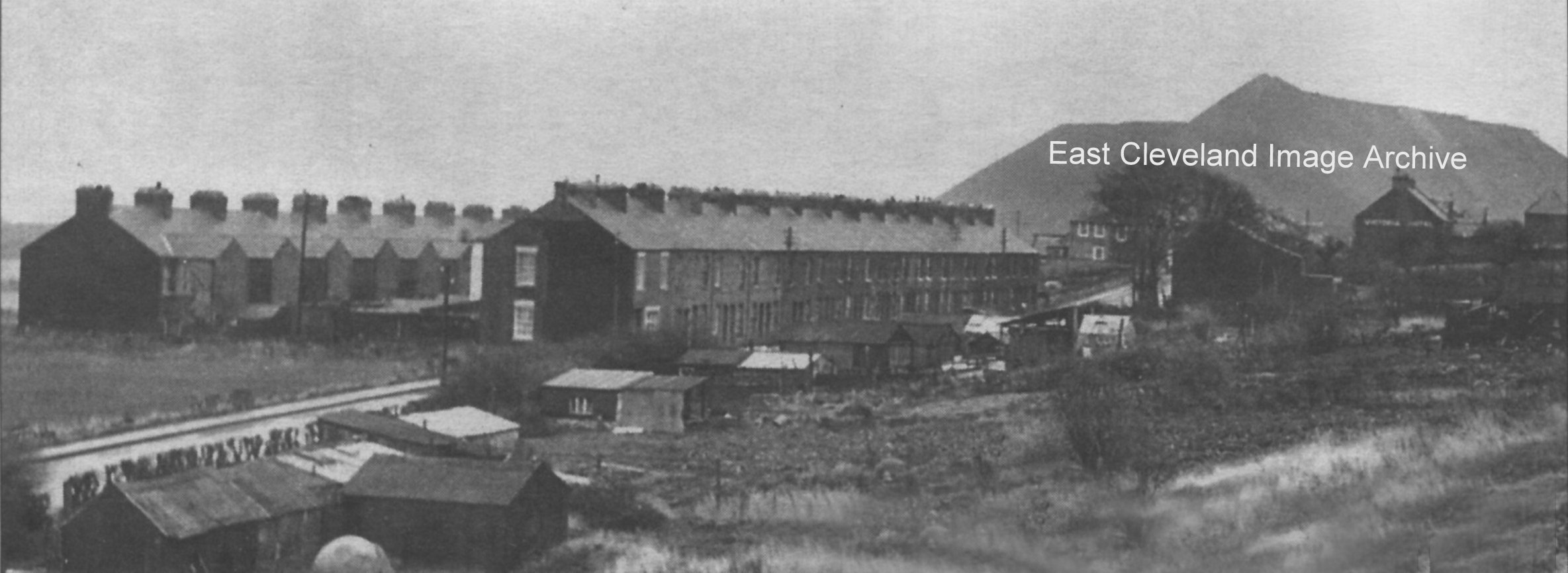 Oldham Street, Moorcock Row and the Victoria Inn are shown on this photograph, of course the shale heap is very visible, all long gone now, although the name Moorcock Row remains – attached to the new houses built on the old site. What date was it taken – does anyone know? Paula Miller has advised: ”This photograph was taken by the Evening Gazette”. Derek Dobson remembers: “Looking out of our front window as a child I would see the full size heap for years, lived in Prospect Terrace. I’m 62 now; spent many a summers day, me and Paul Tyrka sat waving at the training jets buzzing us. There were that many fossils, collecting them was never an option. Great things to climb, some parts almost solid other paths constantly crumbling as you climb. I’d be seeing heap this size in 1960; great place to sit look down on the whole village, taking in the distant view leading to the moors. There was constant rivalry between bottom-enders and top-enders; so fought each other for entertainment, but all together when defending ourselves.” Judith Green (nee Taylor) told the Archive: “I was born at 35 Oldham Street, my grandmother’s house, and spent most of my childhood playing in the streets there. My cousins, the Beckley family lived at no.15. I took piano lessons with a lady at no. 17 but cannot remember her name. I remember the pit disaster and my cousin Louis Booth was killed in a motor bike accident in 1955. All the residents supported each other in those sad times A great community.”. Michael A. Buble has added: “Just after World War II (circa 1947) when I was about 12 years old, I was reading in our our local newspaper, a list of young people in England my age, looking for pen pals in Canada. I chose to write to Lewis Booth at 35 Oldham Street, Lingdale, Saltburn. This began a regular exchange of letters throughout our teen aged years and into adulthood. Lewis also wrote me from Egypt where he was serving with the British Forces. In 1955 a letter came to me from 35 Oldham Street, but it was not from Lewis. It was from Mrs Booth, his mother. She informed me that Lewis had died in a motorcycle accident. I was quite distraught over this news. Lewis and I, through the years of correspondence had truly become pen pal friends. In the letter, Mrs Booth enclosed a picture of the grave, all covered in flowers, where Lewis was buried, I continued to keep in touch with Mrs Booth. Then early in 1963 (around February) I advised Mrs Booth that I would be visiting England sometime in June of that year and I was looking forward to meeting her in Lingdale. She wrote back and said she would be so happy if we were to meet. Image courtesy of a cutting from the Evening Gazette, thanks to Derek Dobson, Judith Green (nee Taylor), Paula Miller and Michael A. Buble for the updates and comments.
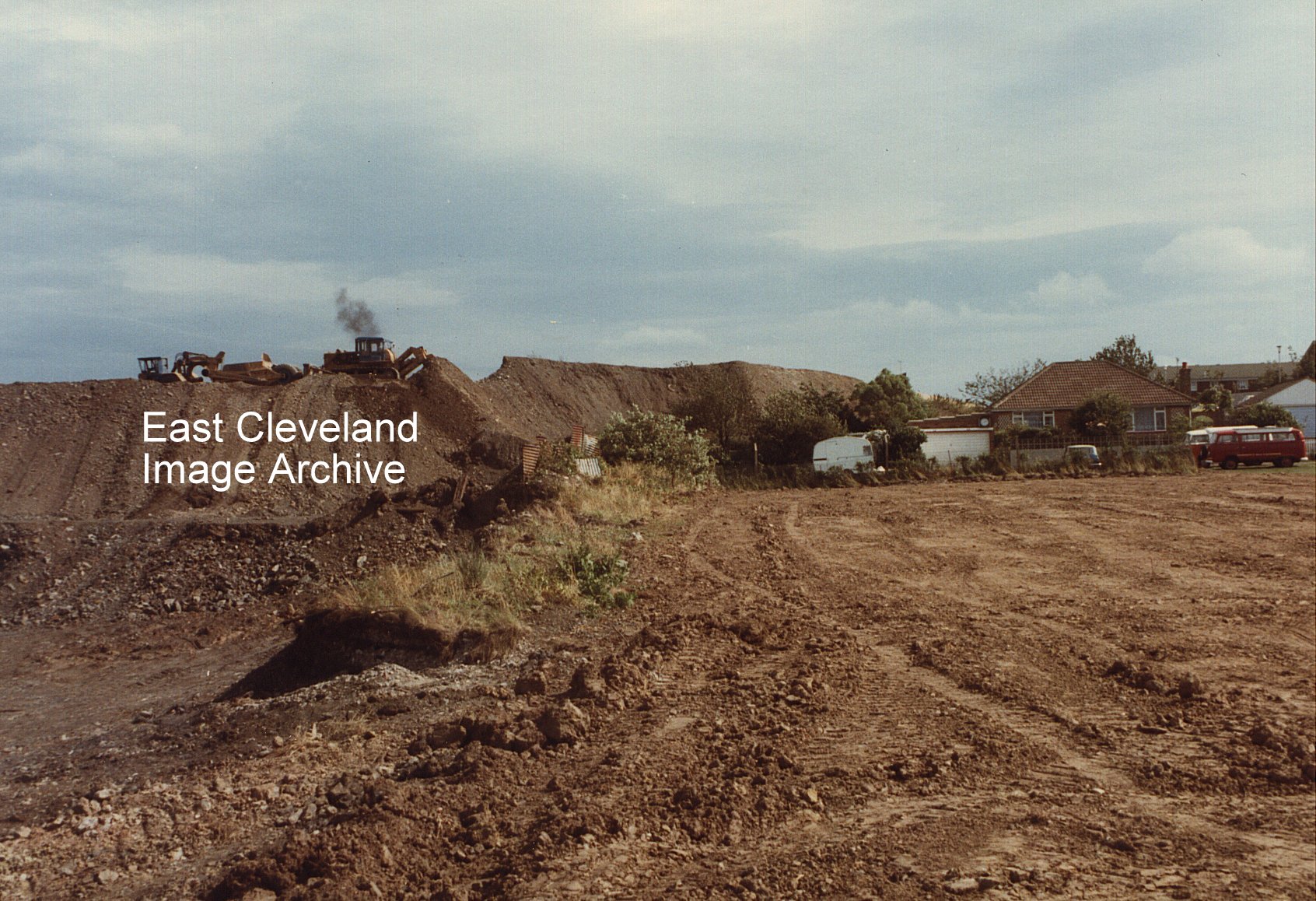
Well the photograph is dated and tells us what is happening so there is no more for me to write. However Derick Pearson tells us: ” I was standing on what was the footings of Coral Street and North Terrace at Lingdale; I took this for the records of Lingdale local history at that time. The shale heap was being removed by George Carey Haulage. The man on the D6 digger and loading the lorries was George Found and the man in the lorry that day was George (Sooty) Thorpe. The bungalow you see was my father-in-laws and the red Volkswagen Caravanette on the driveway was mine.” Photo originally taken by Derick Pearson and many thanks to Derick for that update. 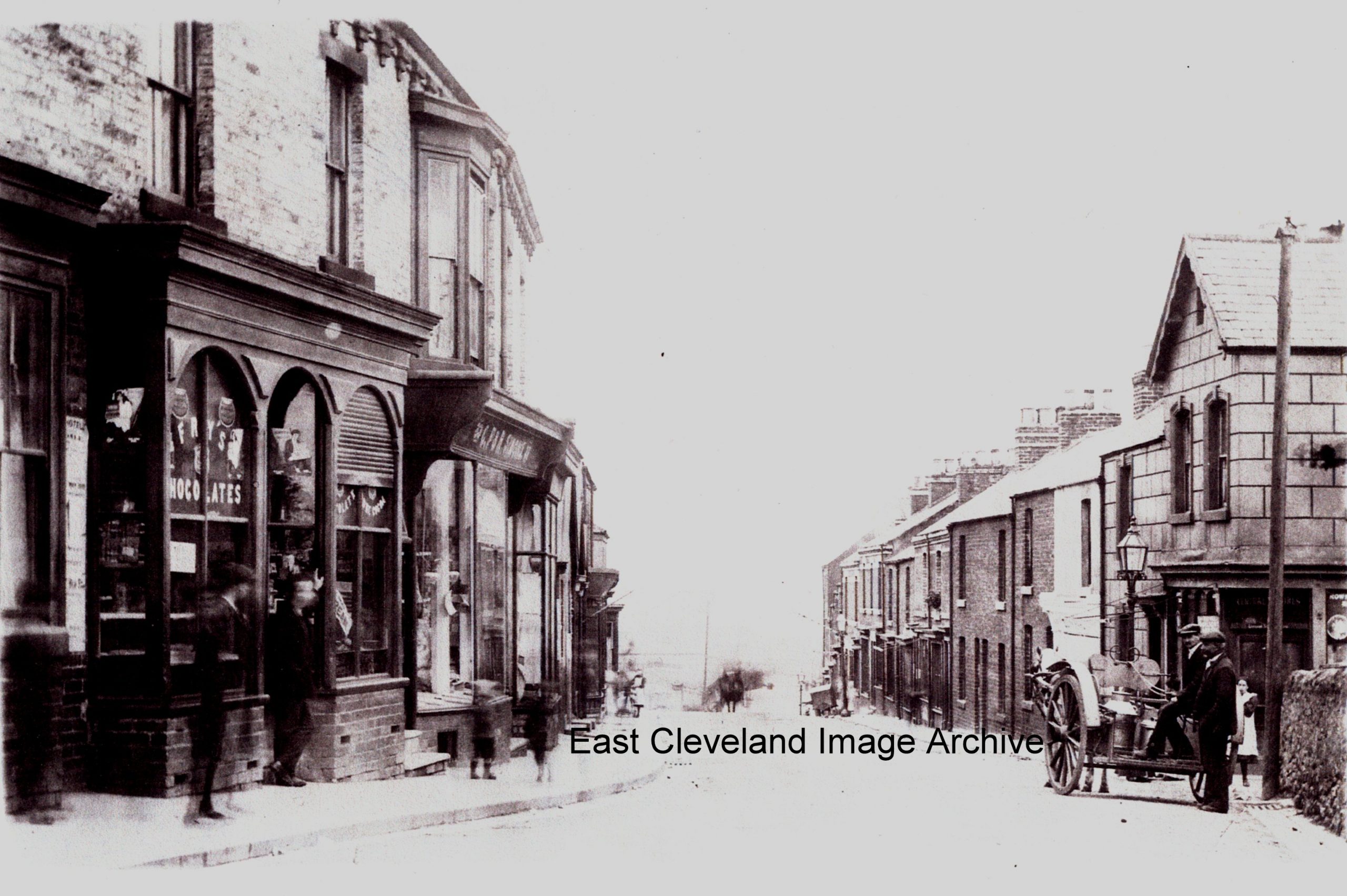 The High Street at Lingdale dated 1913, an image of another thriving village at that time. Image courtesy of Mike Holliday. |
||
Recent Comments