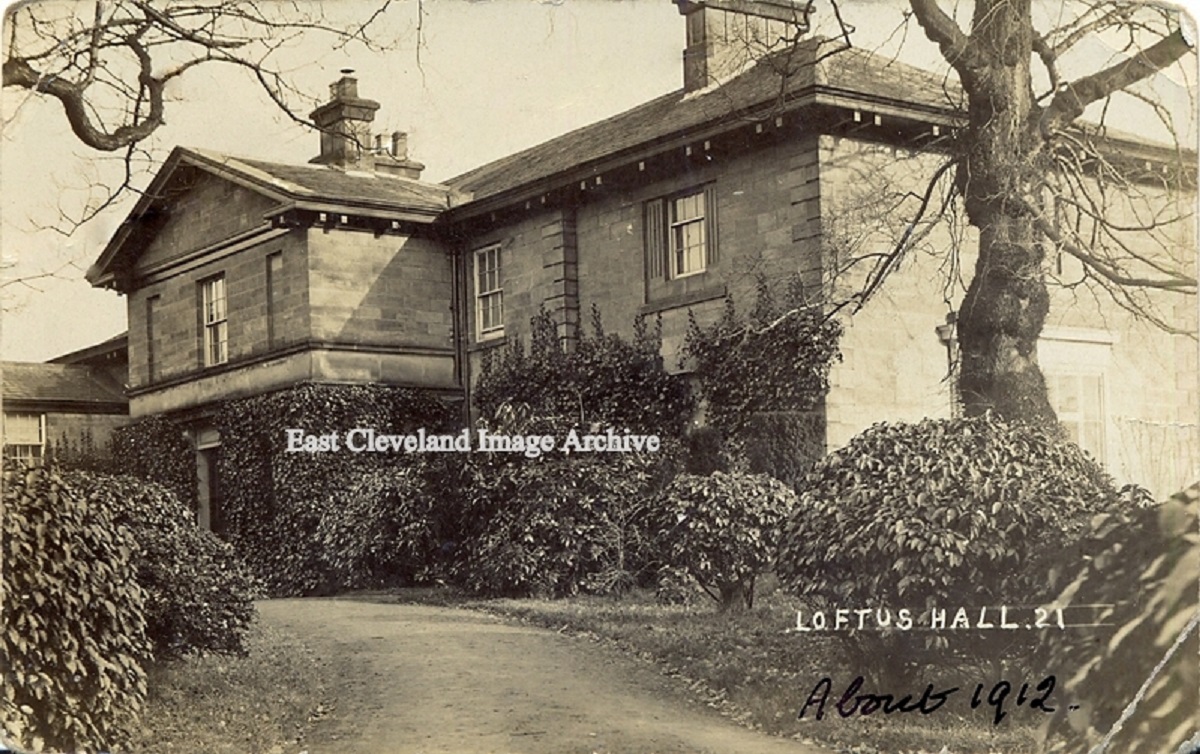
Loftus Hall; built in the the area now known as Hall Grounds, Loftus. Around 1840 Sir Robert Dundas decided to build a new hall and enclosed a piece of land stretching from the bottom to the top of Church Bank, along the High Street veering to the left of Jasmine Cottage and then back to the woods almost as far as the mill, effectively cutting off Liverton Road, which ran down behind the present library. The route to Liverton was re-sited on Station Road.. Apart from being a local landowner, Sir Robert Dundas was also proprietor of the Lofthouse Alum Works.Peter Appleton has advised: “Sir Robert Lawrence Dundas (1780-1844) inherited the manor of Loftus from his father, Sir Thomas Dundas (1741-1820). By 1829, he had moved his home to Upleatham Hall. His land agent for the manor of Loftus then had use of Loftus Hall as their home. Communication between Sir Robert and his agent was carried out through a memo book system. Sir Robert would write his questions on one page and the agent would place his answers on the opposite page, followed by any requests. On his next visit, Sir Robert would respond to the agent’s requests and then add his own questions, and so it went on. At least one of these memo books has survived and is in the archives at Northallerton. A brief perusal of it indicated that Sir Robert visited Loftus approximately once a week, sometimes more frequently. When Sir Robert Lawrence Dundas died, he passed his manor of Loftus to his nephew, Sir Thomas Dundas (1795-1893), son of his elder brother Sir Lawrence Dundas (1766-1839).”
Image courtesy of Alan Richardson, additional information courtesy of Jean Wiggins; thanks also to Peter Appleton for the update details on the Dundas family.
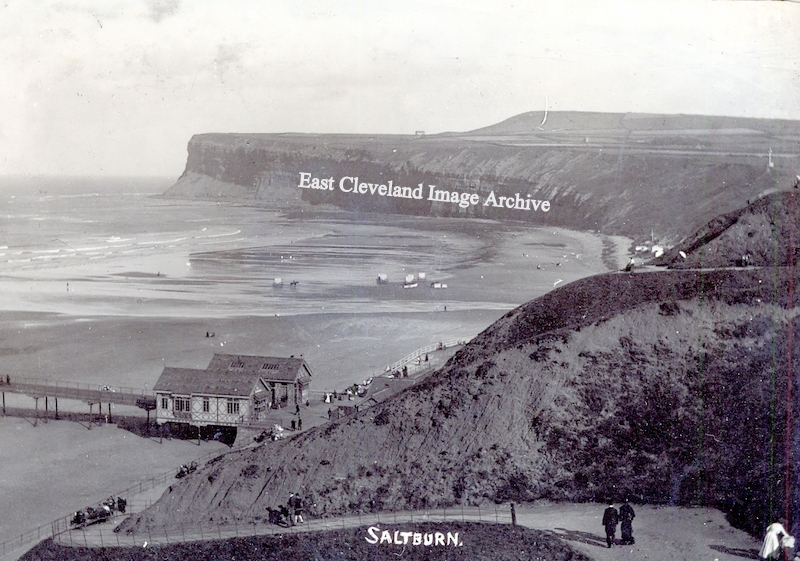
Saltburn showing an alternative way to the beach instead of using the cliff lift, some of the paths from the top promenade are now alas no longer usable. On the beach several bathing huts can be seen, one is being hauled by horse back to the slipway near the Ship Inn, date is pre World War I.
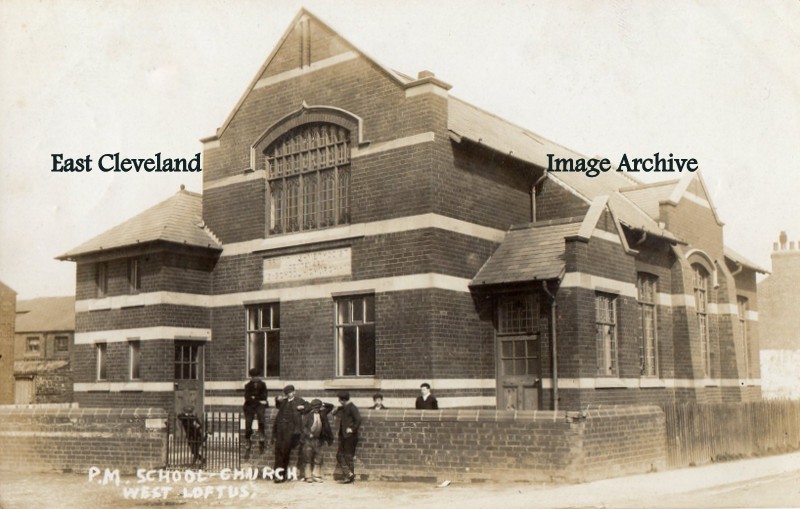
Primitive Methodist Chapel and school at Mill bank top, Loftus. This fine building had a short life; officially opened in September 1911 and then it was destroyed in a landslip in 1927. There are images elsewhere on the Archive of the aftermath of the slip. Adam Cuthbert commented: “Never seen a photograph of this before. It looks like this is where the park is now at top of the hill? Are there any photographs of the petrol station that was on the other side of the road?”
Image courtesy of Pat Bennison, thanks to Adam Cuthbert for the update.
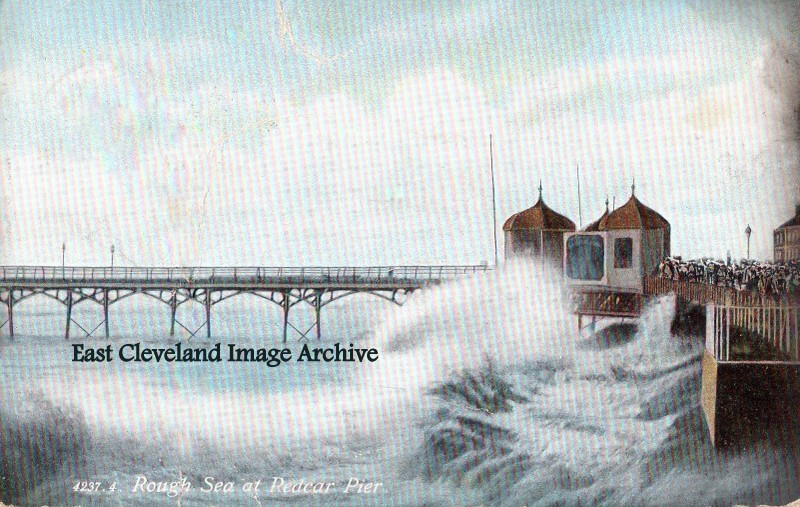
Redcar Pier built in 1873, with a crowd of spectators living dangerously leaning on the railings, watching the large wave about to give them a soaking.
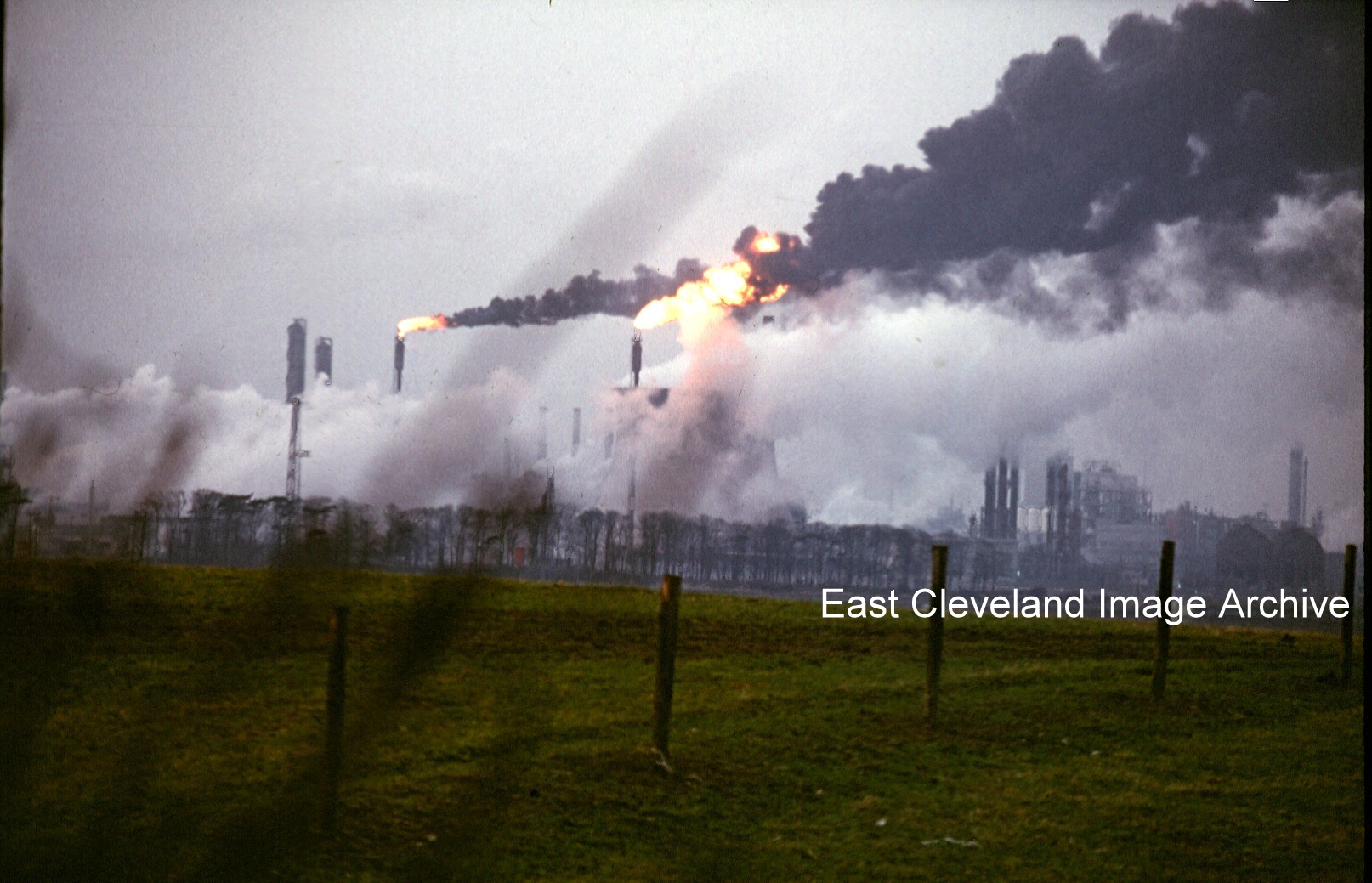
Even in 1973 the Wilton flare stacks caused problems. Andrew Pryce comments: “I remember the flares vividly, we lived in Redcar on the old Lakes Estate and Iwas working in Guisborough at Blackett Hutttons at the time as a machinist. Used to drive past and see the flares.” Keith Willshaw assists with: “It was much more of a problem back then. I started as an apprentice at ICI Wilton in 1968 and was around until Olefines VI had been built in the mid 70’s. That amount of smoke would get you into trouble today as the regulations require that in normal operation no visible smoke should be produced. If nothing else it means unburned hydrocarbons are being emitted which could be toxic, carcinogenic or both.
Image courtesy of Owen Rooks; thanks to Andrew Pryce and Keith Willshaw for the updates.
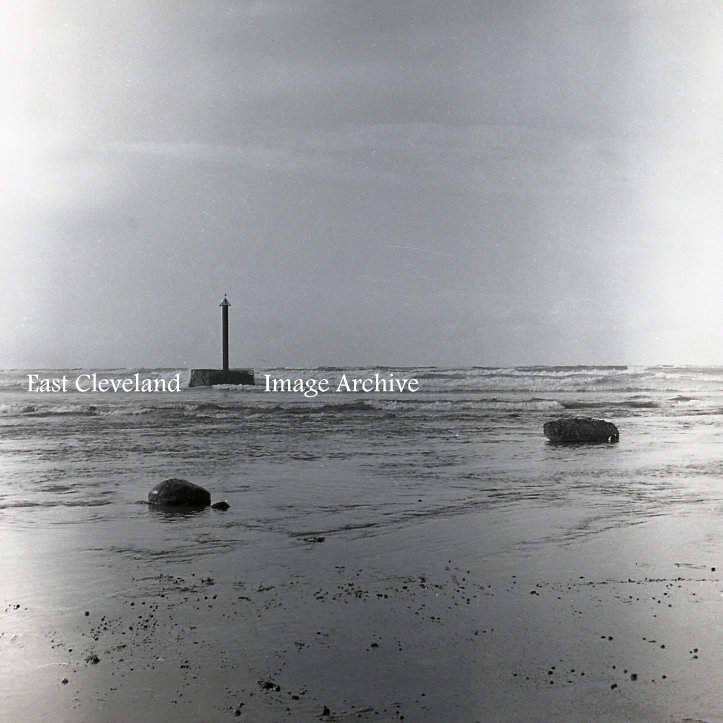
Even 60 years ago it looked the same. I can remember first seeing this strange point in the sea and wondering what it was for? A. N. Andrew comments: “It did look like that 60 years ago the pipe leading to the outlet was three to four feet above the level of the sand.
Image courtesy of Ken Loughran, thanks to A. N. Andrew for the update.
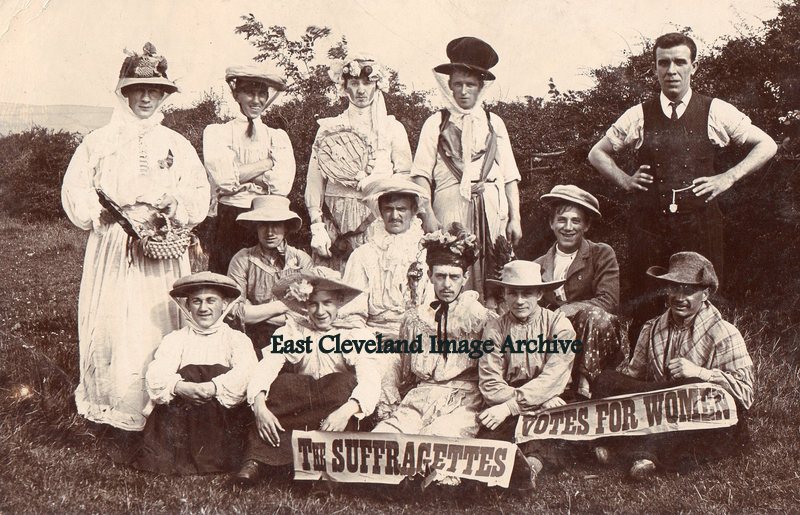
Suffragette’s or crossdressers? Are the men supporters or is it a spoof? The trainer on the right, suggests a cricket or football team and this is supported by comments from Derick Pearson. Perhaps a fund raising event, believed to be at Carlin How. Can anyone help with further information.
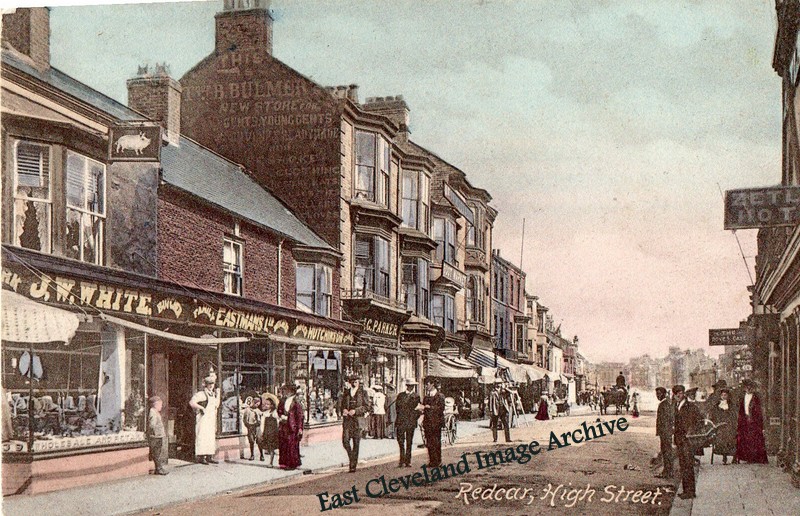
A busy Edwardian scene on Redcar High Street. A complete contrast to the present day, with the decline of the British High Street. Are any of the shop owners descendant’s still in business or are they long gone?
Recent Comments