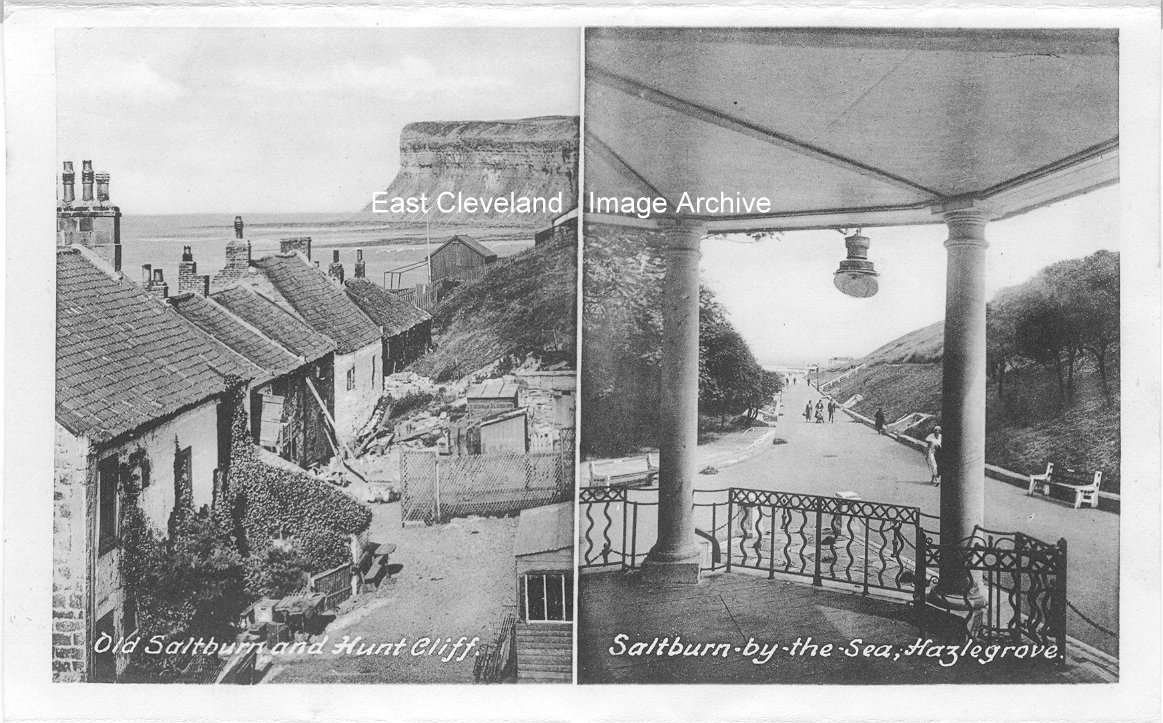
First of a series of postcard views of Saltburn, showing a view of Old Saltburn cottages, beside the Ship Inn and a view down the lower section of Hazelgrove from the bandstand now no longer in existence. Callum Duff tells us: ”The pillars that used to support the roof of the Hazelgrove bandstand were salvaged and now hold hanging baskets along one side of the Italian Gardens.” Tom Metcalfe remembers: “I lived in Saltburn up to 1962, when I joined the Royal Engineers. During my early years I had lived with my grand parents in the gardener cottage in the Valley Gardens and then 26 Montrose Street.” Peter Appleton asks: “The photograph of the cottages to the east of the Ship Inn triggered a question in my mind. When were they built? Which led on to: when was the Ship Inn built? Does anyone have any ideas on either answer? If the accepted stories about John Andrew, the smuggler, are true, he arrived in Saltburn in the early 1780s. The Ship Inn, at least, must have been standing then. But what about those other cottages?” Can anybody assist with this query?
Many thanks to Callum Duff for the update and Tom Metcalfe for the memories, also thanks to Peter Appleton for the query.
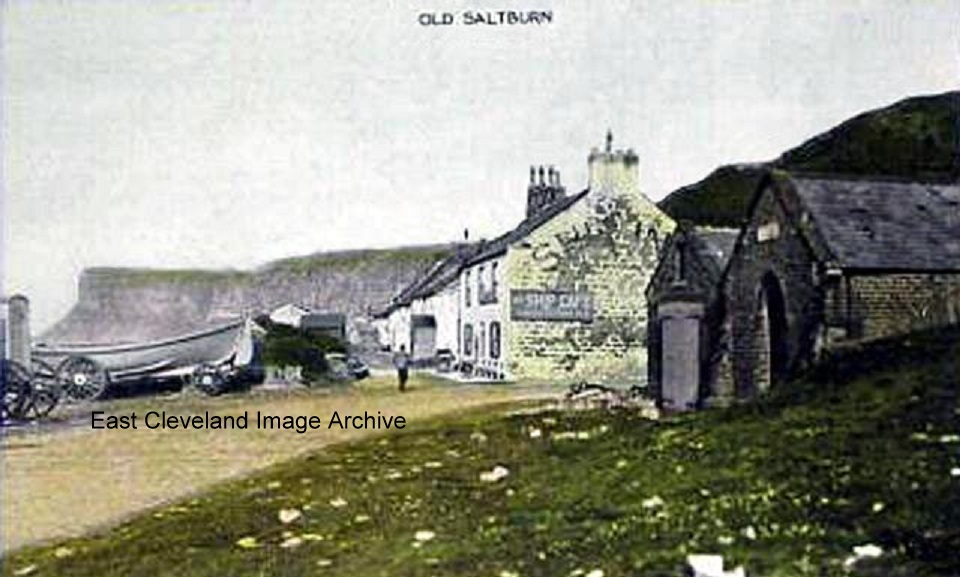
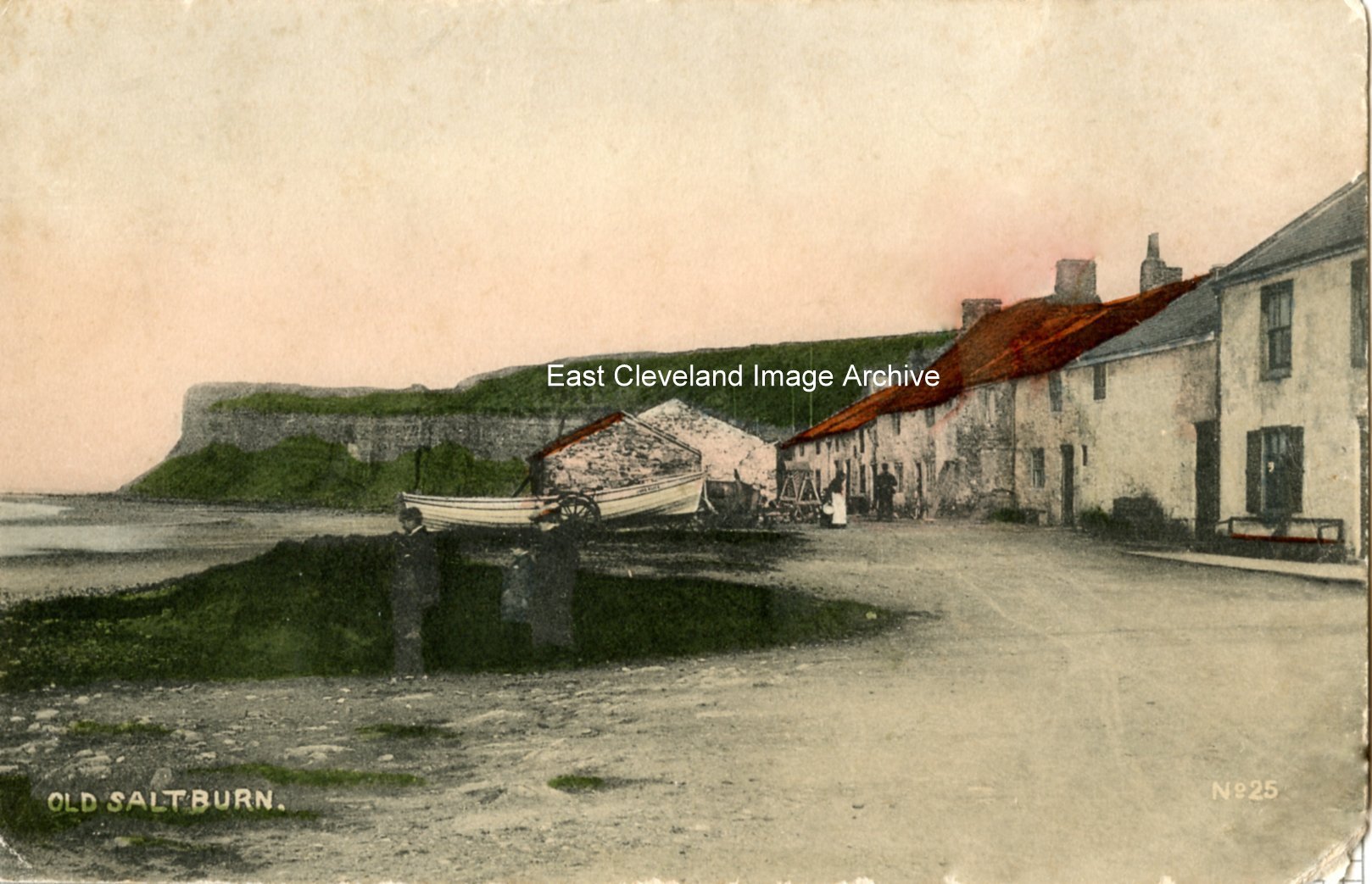
The boats are pulled up and the Ship Inn is there along with the cottages, but no made up roads. Please tell the Archive what date you think this photograph would be.
A tinted postcard view of the cottages at Old Saltburn that was posted in 1905, this in the days when Old Saltburn was a hamlet. The Ship Inn is on the extreme right of this view, unseen and behind the photographer would be other buildings; including the Lifeboat building, Mortuary and Rocket Launching building. The ‘Ship’ was not the only place for ‘refreshment’, as well an inn called the ‘Nimrod’ there were several ‘gin shops’!
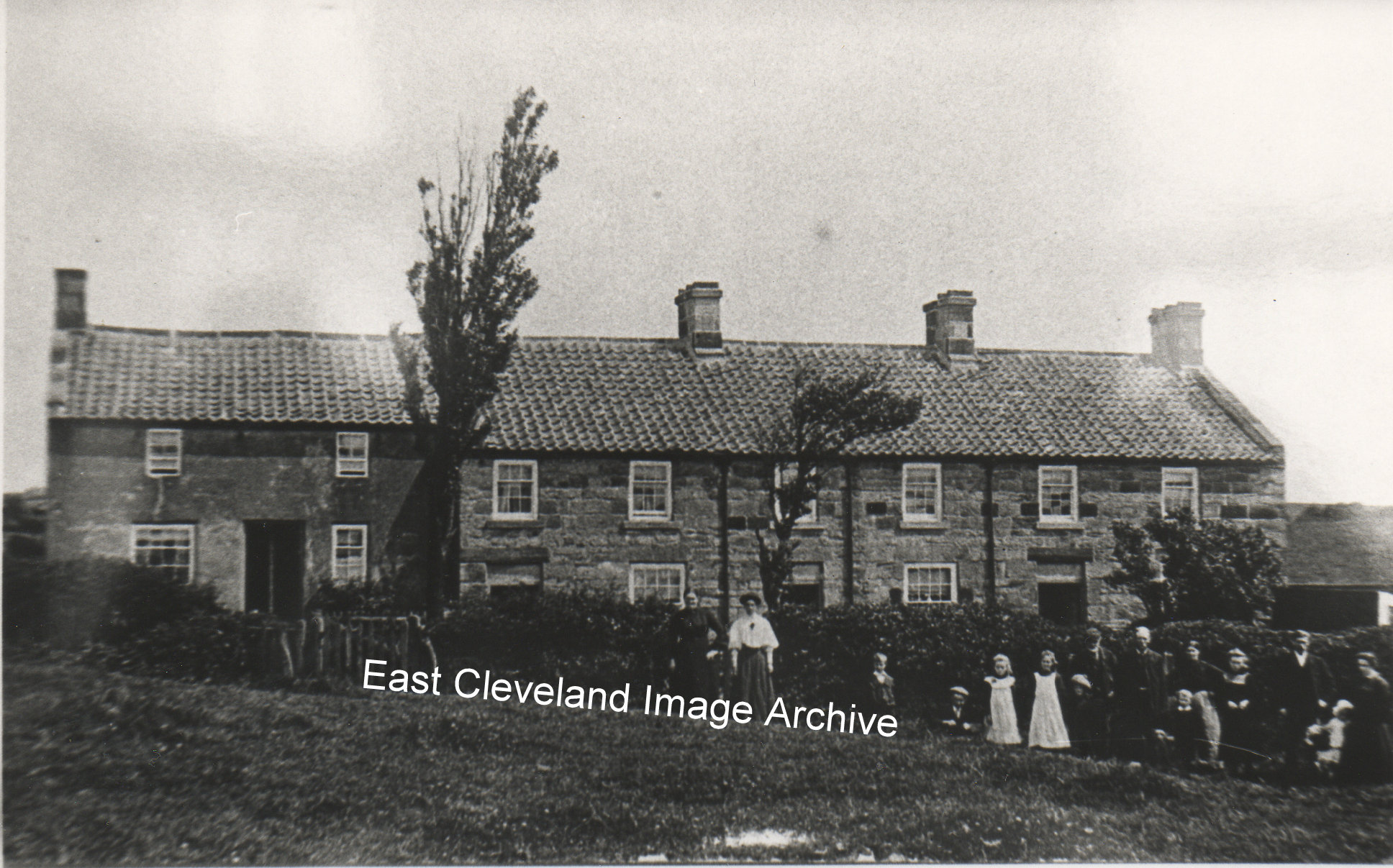
Four cottages made up this row of fine freestone buildings with red clay pantile roofs. They were set in the fields between Loftus and Easington (going through Foulsyke, just past the houses there is a small gate that leads via a public footpath to the cliff road). Over one field and then Arthur Fields came into view. If my memory serves me rightly there was a windmill in the field near these cottages, long since demolished (both the windmill and the cottages). This collection of cottages sadly no longer with us, were similar to those of Micklow Cottages and were developed to house the alum workers of Hummersea. Katherine Johnson told the Archive: “My great grandparents lived at Arthur Fields for many years. They were Joseph and Ada Readman and their son Eddie lived with them for a while too. At one point in the 1950’s my mother – Margaret Johnson nee Readman moved in with her parents Betty and Alban Readman and her brother Francis Readman. I believe this was only for a short time.”
Kay Petherick adds: “I have just discovered that the daughter of my great great grandparents lived at no. 2 in the 1891 census. Mary Brignall (nee Johnson) with her husband Robert and their 4 children. What a disappointment to find the cottages no longer exist.”
Image courtesy of the David Linton Collection and others, thanks to Katherine Johnson and Kay Petherick for the updates.
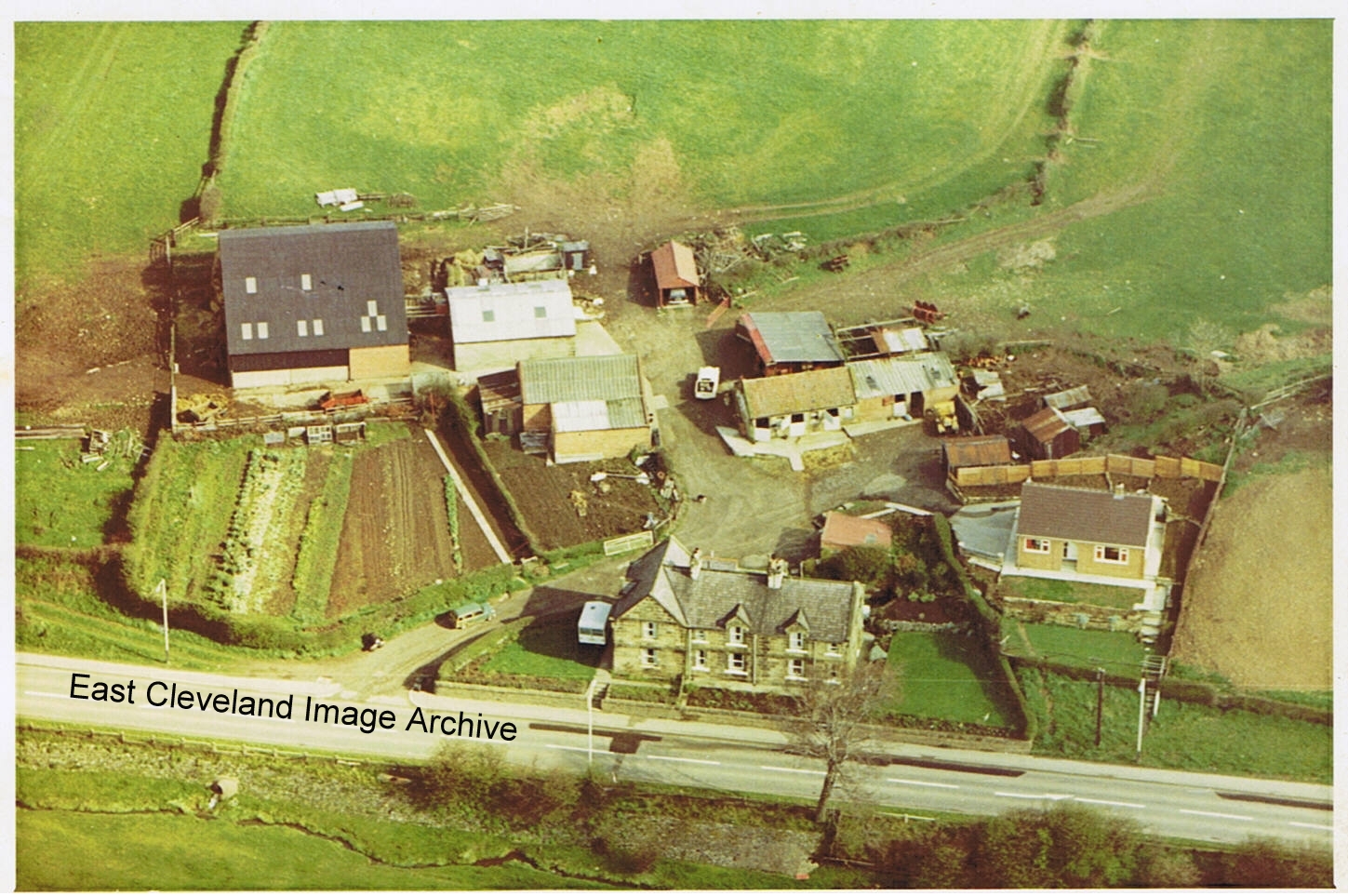
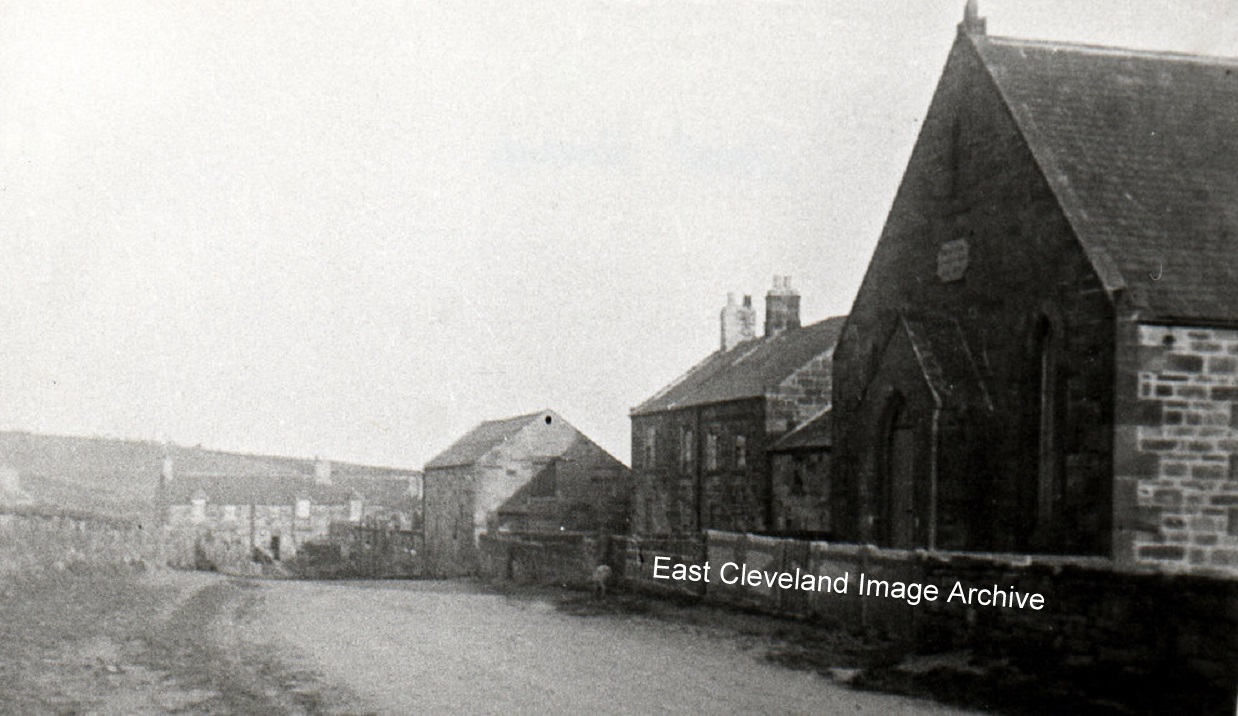
Built in 1872 the Primitive Methodist Chapel at Street Houses; the former chapel now forms part of the farm buildings of Street Houses Farm. The stables beside the chapel experienced the Zeppelin raid of 1916. Considerable burning took place, which is still evident in the rafters of the stables. The chapel (now in the process of repair by Tony Garbutt) survived to this day, despite being ”modified” for use as a barn by previous farm owners.
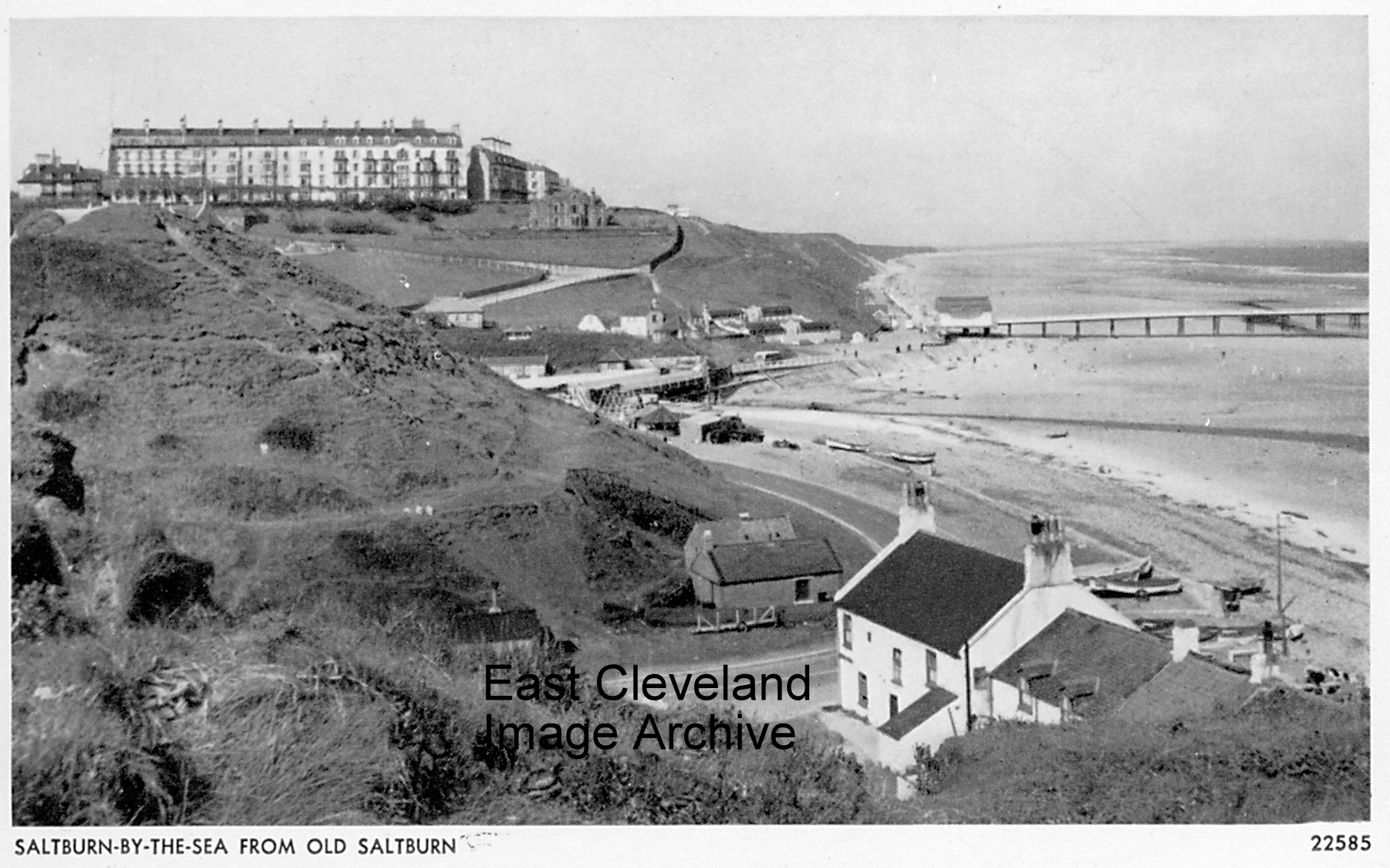
A fairly recent image of Saltburn taken from the steep climb up the Cleveland Way behind The Ship Inn. Ray Brown was asking about the old building next to the Old Mortuary. Callum Duff advises us: ”In actual fact, the building next to the Mortuary was the Rocket Brigade. The Brigade were designed to aid the lifeboat crews and attempt to secure a line from dryland to ships in difficulty. The lifeboat house actually stood next door and was demolished sometime between 1924 (when the Saltburn lifeboat ‘Mary Batger’ was sold) and the start of World War II.”
Image courtesy of Raymond Brown and many thanks to Callum Duff for that update.
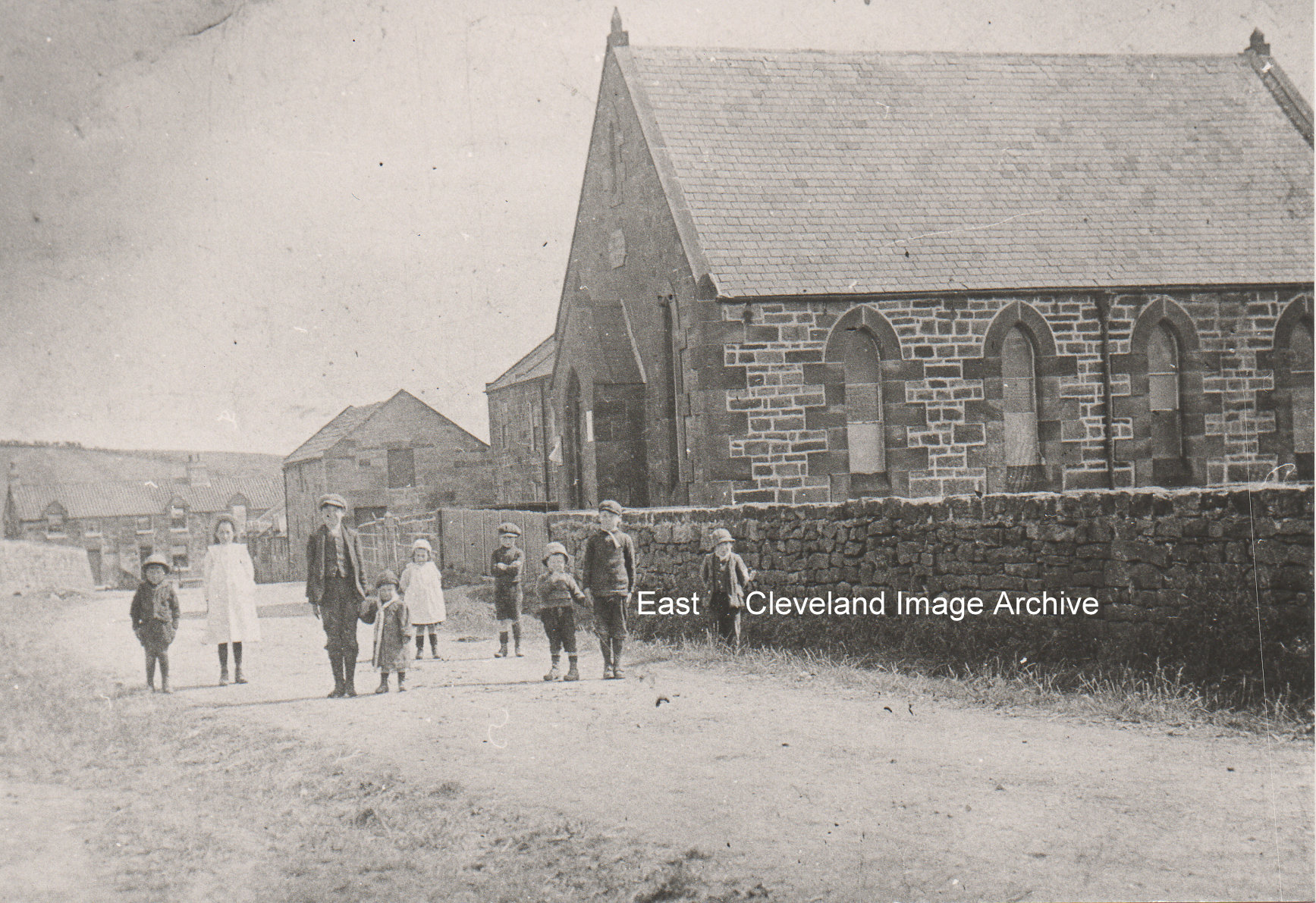
The children must have been told the photographer was coming and are eagerly waiting for their photograph to be taken. Streethouses was once a thriving community; large enough to warrant this primitive Methodist Chapel, which was opened in 1872. The cottages of Streethouses on the left of this image (and stood on a slight angle at the junction of the track from Easington and the Boulby road) have long since been demolished along with Arthur Fields, Micklow Cottages and Rockcliffe Cottages. Street Houses, Primitive Methodist Chapel (AD 1872) and the Primitive Methodist Chapel at Arlington Street Loftus (AD 1870) are unusual, they are both aligned north/south instead of east/west as other Christian churches are. This may be peculiar to Primitive Methodists (or a faulty compass). Eric Johnson tell us: ”I was baptised at Arlington Street and I don’t know the answer.”
Iain Warnes was born at Upton and christened in this chapel in 1939, his grandfather Walter Warnes, had a small farm at Upton. His great uncle Aaron Rolling had a smallholding at Hummersea next to Tommy Hart.
Image courtesy of the Pem Holliday Collection and others; supplementary information supplied by descendants of Tommy Hart.
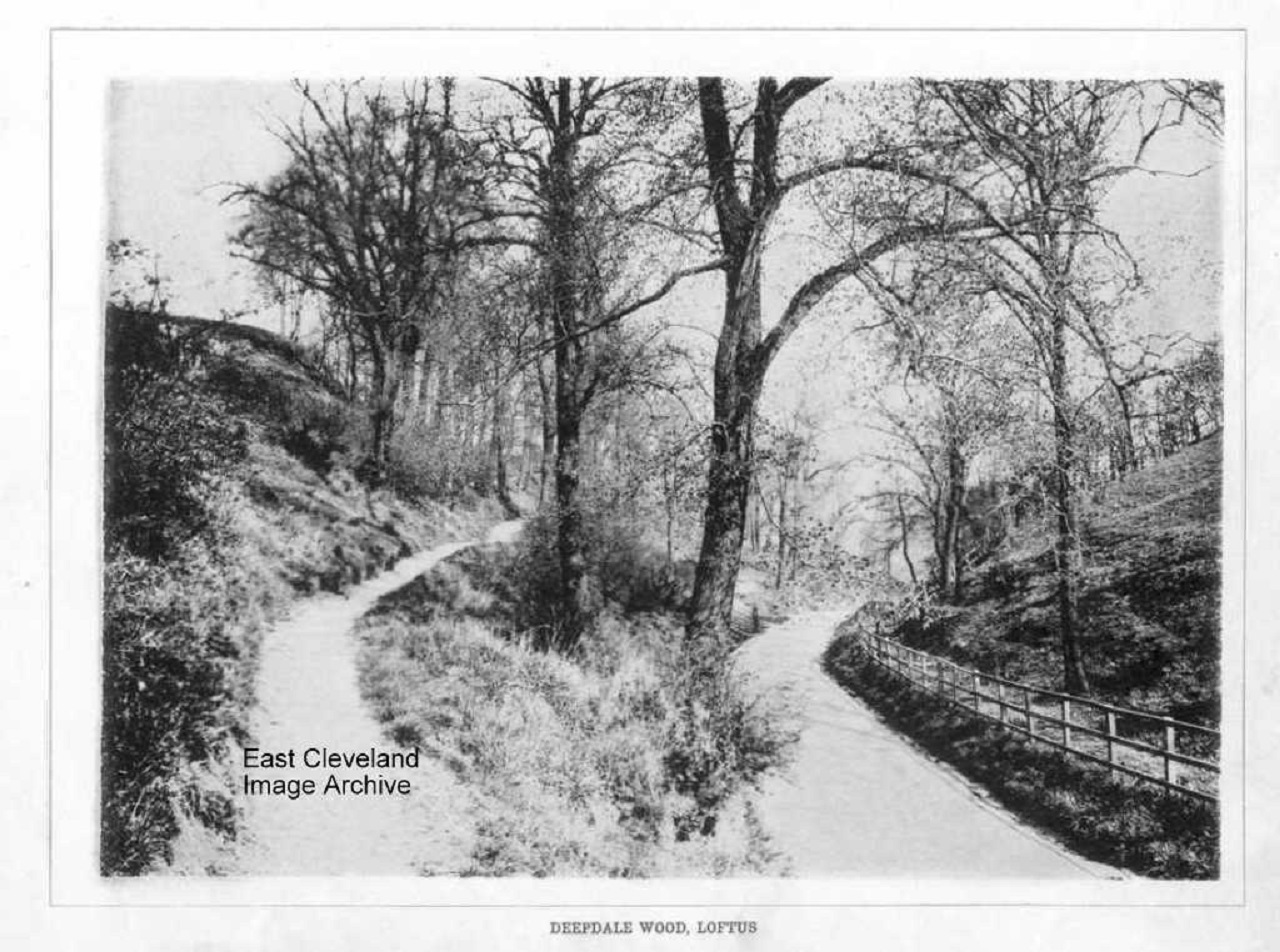
A pleasant view of Deepdale Wood, dating from the 1900s; another view to prove that the area was not all steel works and ironstone mines.
Image courtesy of the Pem Holliday Collection; taken from ”Cooke’s Views of Loftus and District” an album of views around Loftus produced by Cooke’s Fancy Bazaar of West Road, Loftus.
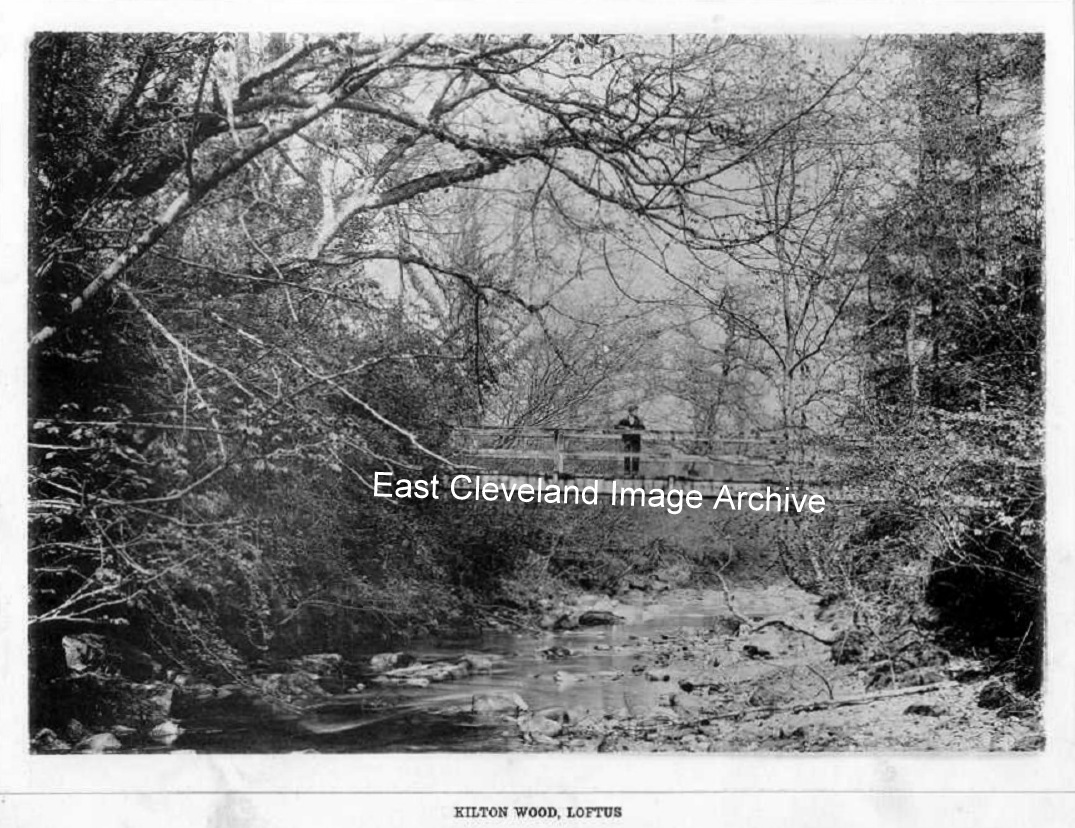
An idyllic rural image, just to show that the Loftus area wasn’t all Ironstone Pits and Smelters – well most of it was!
Image courtesy of the Pem Holliday Collection; taken from ”Cooke’s Views of Loftus and District” an album of views around Loftus produced by Cooke’s Fancy Bazaar of West Road, Loftus.
Recent Comments