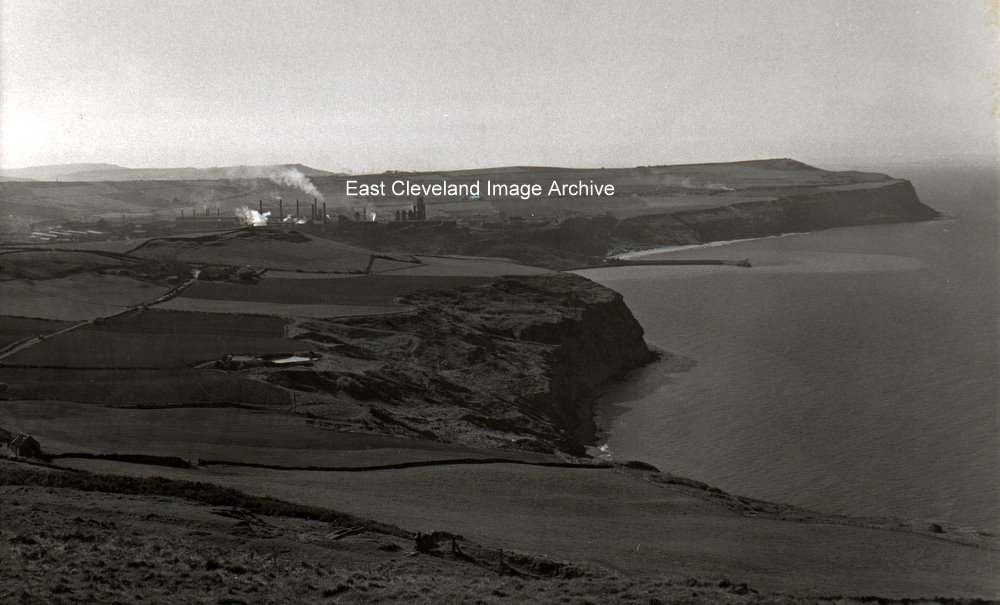
A lovely view of the cliffs and the sea, there is Hummersea bay, Skinningrove and Cattersty, the jetty can be clearly seen and the smoke tells us where the ironstone works are. Hummersea Farm can also be seen, as can the shine of a pond in the centre of the image. Following a comment from S. Welford; Eric Johnson advised: “‘Snilah’ ponds were originally two ponds, I was told they were the settling ponds for Hummersea Alum Works. I remember them as home to a colony of great crested newts, dragonflies, and other aquatic wildlife; surrounded by purple spotted orchids. The site was used for filling in with industrial waste. Many years later walking past the site I observed a black oily substance oozing from the area. A sad end (and I don’t belong to the green party!). Heather Bann added: “I also have a postcard picture taken approx. same time though the tide is out; position almost exact. My grandmother Annie Hammond (nee Burns) of Fylingdales, had sent it to my grandad just prior to their wedding in 1914. She has marked the house which can just be seen cut off a bit at the left edge as her half sister’s house, Lucy (nee Burns) and George Wren. She has also marked the farm further up and just below the ‘smoke’ from the works as “Where my uncle lives” I do not know is this an uncle on the Burns side or her mother’s side the Wedgwood’s? Would love to know.
Thanks to Eric Johnson, S Welford and Heather Bann for the updates.
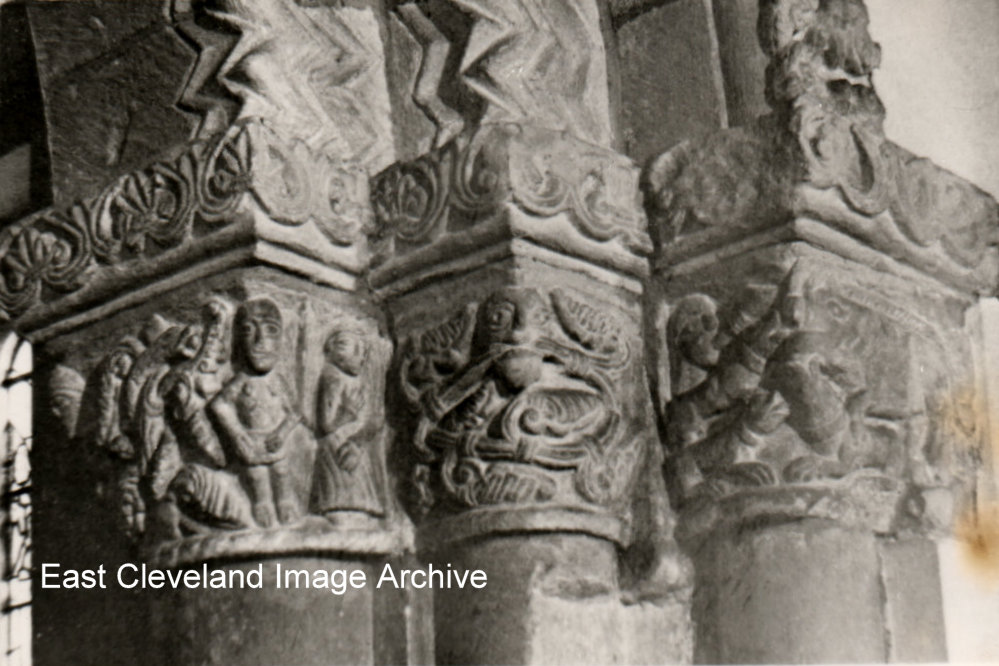
The Archive asked of this some of the carved pillars inside the church: “Anyone know when this church was built?” Phoebe Newton advised: “It was built in the 12th century but restored in the late 18th century, the carvings must be Norman.”
Image courtesy of Jean Dean, thanks to Phoebe Newton for the update.
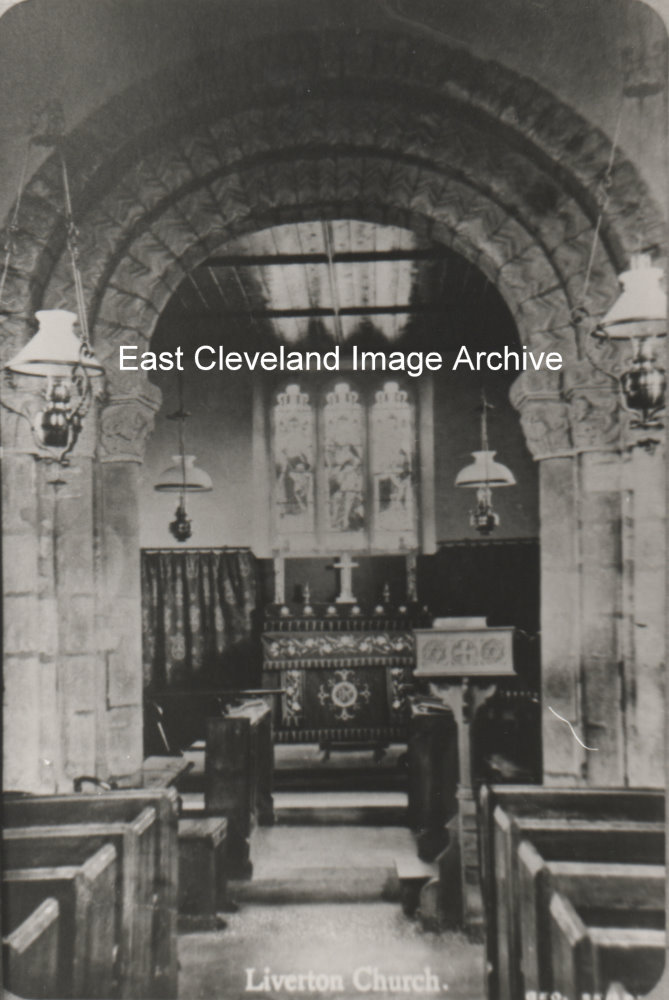
Inside the church at Liverton; a small but beautiful church. Are they oil lamps hanging there? These are also triple Norman Arches – very similar to Lastingham church – near to Hutton le hole.
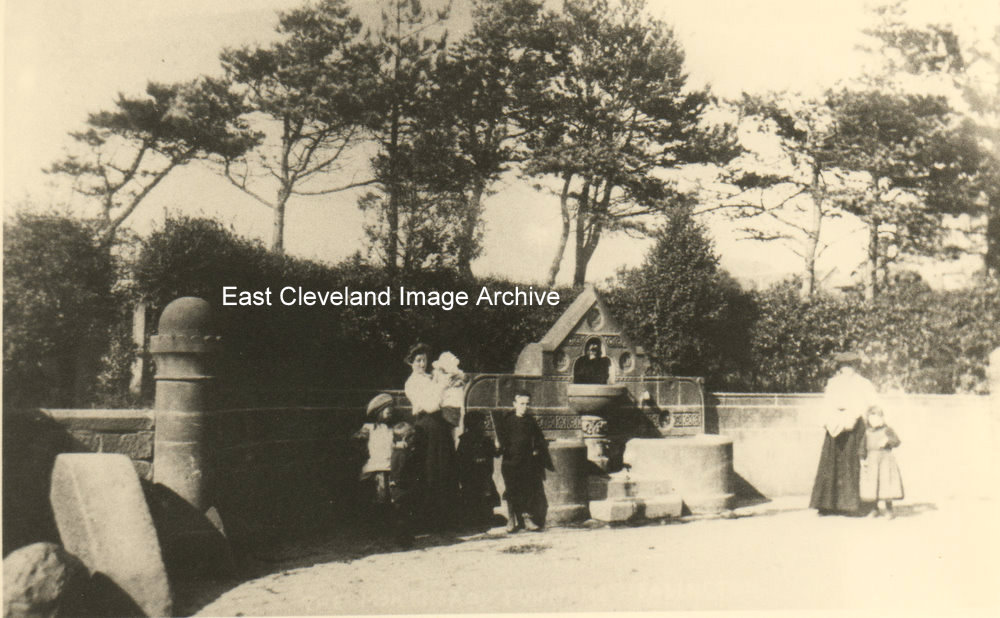
An early photograph of two women and their children near the spring at Easington. The very elegant stonework surrounding the spring was installed by Lord Palmer of Grinkle Park as part of his improvements to the village, in the late 19th century.
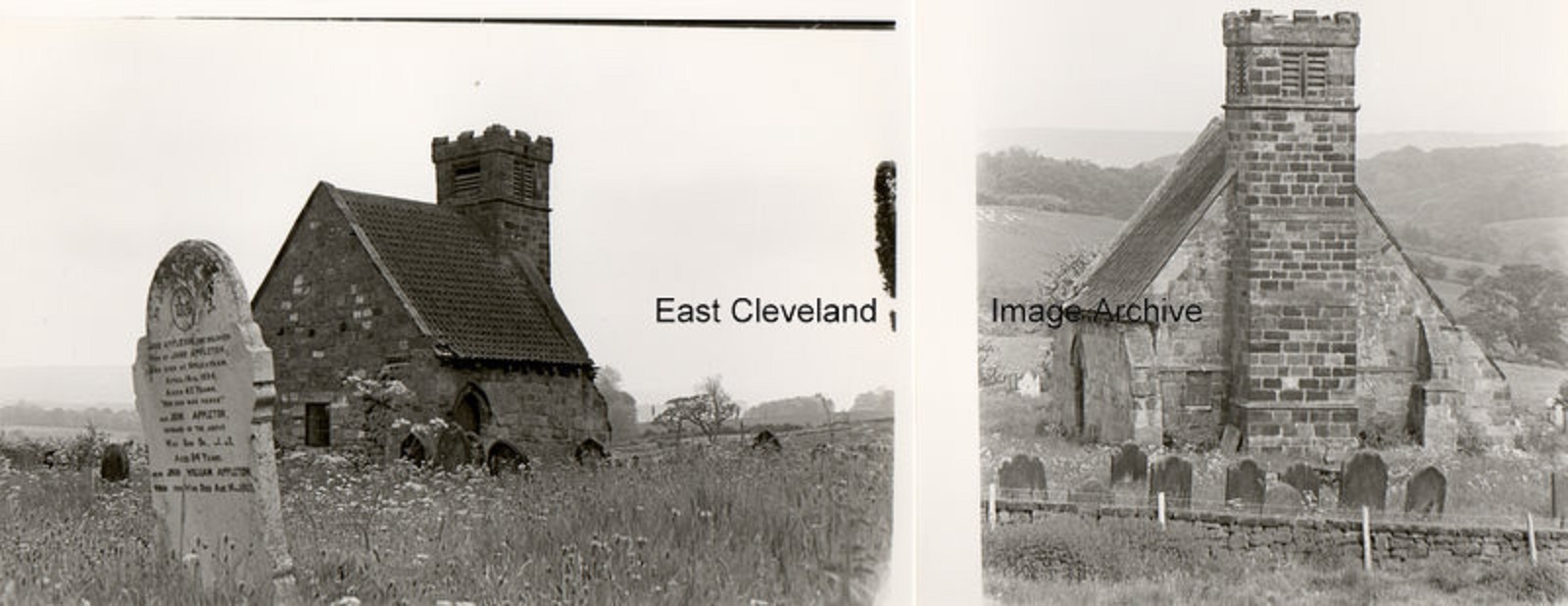
Two shots of the St Andrew’s church at Upleatham small but perfectly formed. For years it was described as the smallest church in Britain, but unfortunately that honour goes to Bremilham Church in Wiltshire at 4 metres by 3.6 metres. Upleatham is about 6 metres by 4 metres and is actually the remains of a much larger church.
Image courtesy of Eric Johnson, additional information courtesy of Chris Twigg ‘Hidden Teesside’.
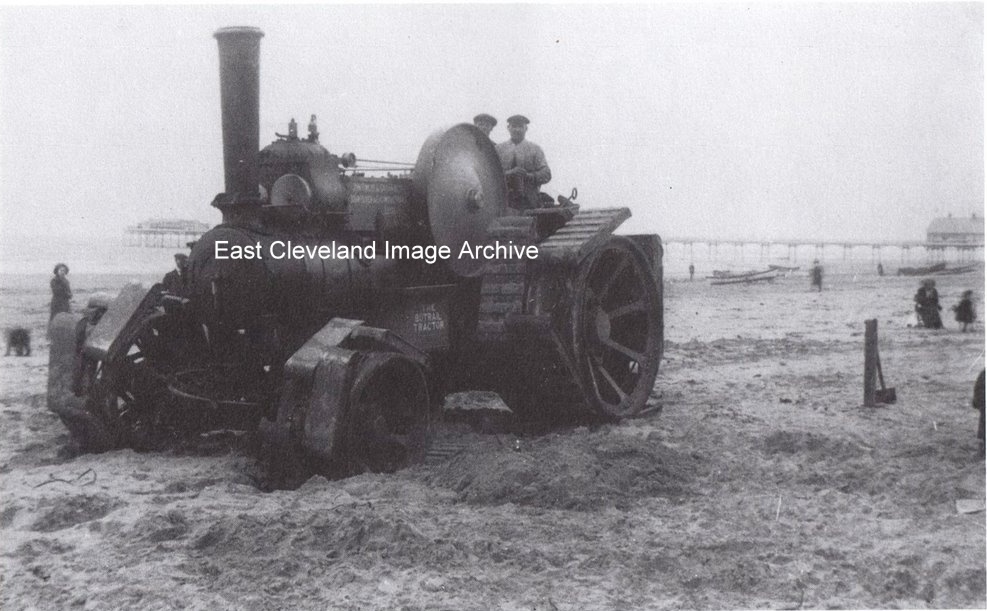
This photograph is a bit of a rarity as well. It is of an experimental Botrail Tractor on Redcar beach around the 1920s. I couldn’t see this as being very successful due to the length of the treads. Too many parts to go wrong. Perhaps that is why we never see this kind of thing to day. It must have been quite a bumpy ride too. Derick Pearson explained: “In 1912 a patent was issued to Frank Bottrill an engineer in Australia for improvements relating to Ped-rail Shoes for heavy road vehicles. in the UK, it was called a Botrail Tractor. However to throw in more controversy there are two of the largest in the world still in use in Australia and over there they use the name Bottrill after the patent holder. So in the UK it is Botrail for models sometime after 1913 and in Australia Botrill.” Whilst Julie Riddiough confirms: “This is Redcar beach, judging by the pier end and the vents on top of the pier ballroom.” Image from a collection courtesy of Derick Pearson; thanks to Derick Pearson and Julie Riddiough for the updates.
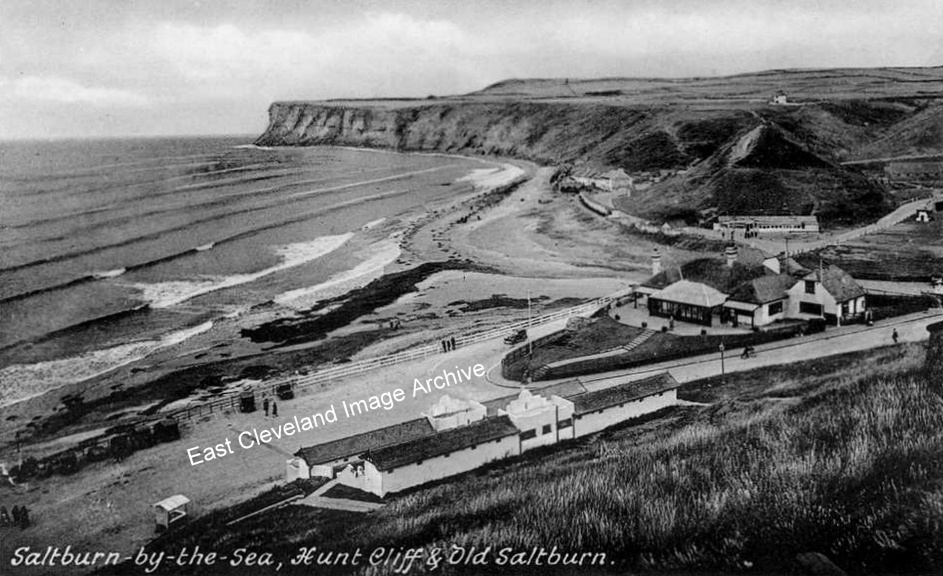
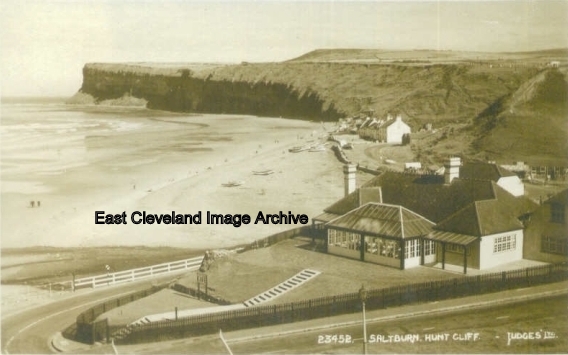
Viewing Huntcliffe from above the chalets which still exist, overlooking the Beach Cafe as it used to be before Rosie O’Grady’s, Stella Mar or Vista Mar (as it is at present time!). Names change, but the views remain the same.
A little different to how we see it today, from the original Beach Cafe to the very obvious row of cottage beyond the Ship Inn. Interestingly there are two buildings at the side of Cat Nab; one the Mortuary and the further away building would be the Rocket Launching Station.
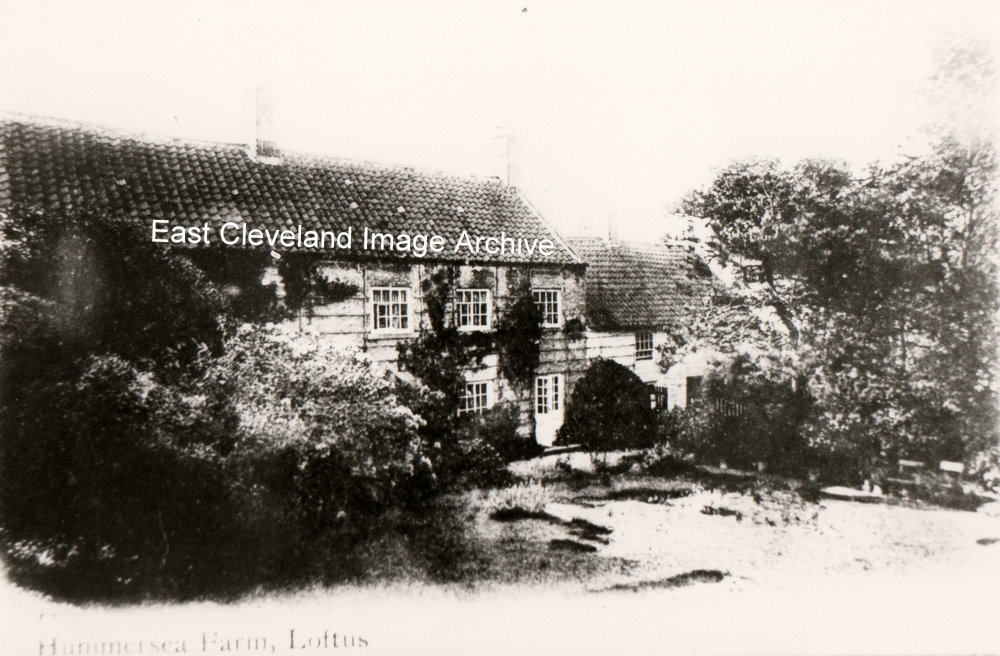
I bet this was quite a classy photograph when it was new, before age faded the image somewhat. Hummersea Farm was originally built for the Manager of the Alum quarries and works, the farm house being built to the right in an ’L’ shape layout. Elsie Hart was brought up on this farm. Neil Dunbar advises: “This view was taken from the garden at Hummersea. Anyone walking past the farmhouse would not even be aware this garden was there. I’m presuming the Elsie Hart that is mentioned is the mother of Ada and Tommy Hart who owned the farm when I lived at Seaview in the 1970′s. Seaview was the bottom part of the ‘L’ which looks out over the farmyard and out toward the sea over Hummersea Cliffs. The upright part of the ‘l’ runs back from Seaview into the hillside and as such is very sheltered from the elements – this is the part I knew as Hummersea Farm and where Ada & Tommy lived. The only views from this building were from the upstairs windows you can see in the photographs – these look toward The Warren and the old alum workings which are further on. At the time I lived there Ada & Tommy owned the two cottages known as The Warren. They were ultimately sold to a local doctor (Guy Etches) who has made a fine home from the two cottages. Tommy Hart sold them cheaply to Guy in exchange for Guy arranging for Tommy’s hip replacement operation. At the time I lived at Seaview, Guy rented one of the Warren cottages and relatives of the people I was living with rented the other one. The views north from the Warren north past Skinningrove Pier and on toward Redcar are stunning.” Vince Brown adds: “Re Elsie Hart. Elsie Hart was Tommy Harts sister her mother was Mary Jackson (born 1876 Brotton) her father Thomas Hart (born 1872 Ugthorpe); married (1902). Other children were Mary, Annie and Hilda. My grandmother was a Hart from Ugthorpe.” Whilst Karen Lyons concludes with: “My father and grandparents used to camp on the farm when it was owned by a Mr Tom Hart – must have been in the 1930s. I have a photo of Mr Hart.”
Image courtesy of Jean Dean, thanks to Ray Harrison (son of Elsie Hart), Neil Dunbar, Vince Brown and Karen Lyons for the updates.
Recent Comments